What is the best month to visit Medellín?
Medellín sits at 19 to 22C all year, so the choice is rain, not temperature. Driest months, wettest months, and why mornings beat afternoons here.
 By Andrés Restrepo, Comuna 13 tour guide & cultural specialist
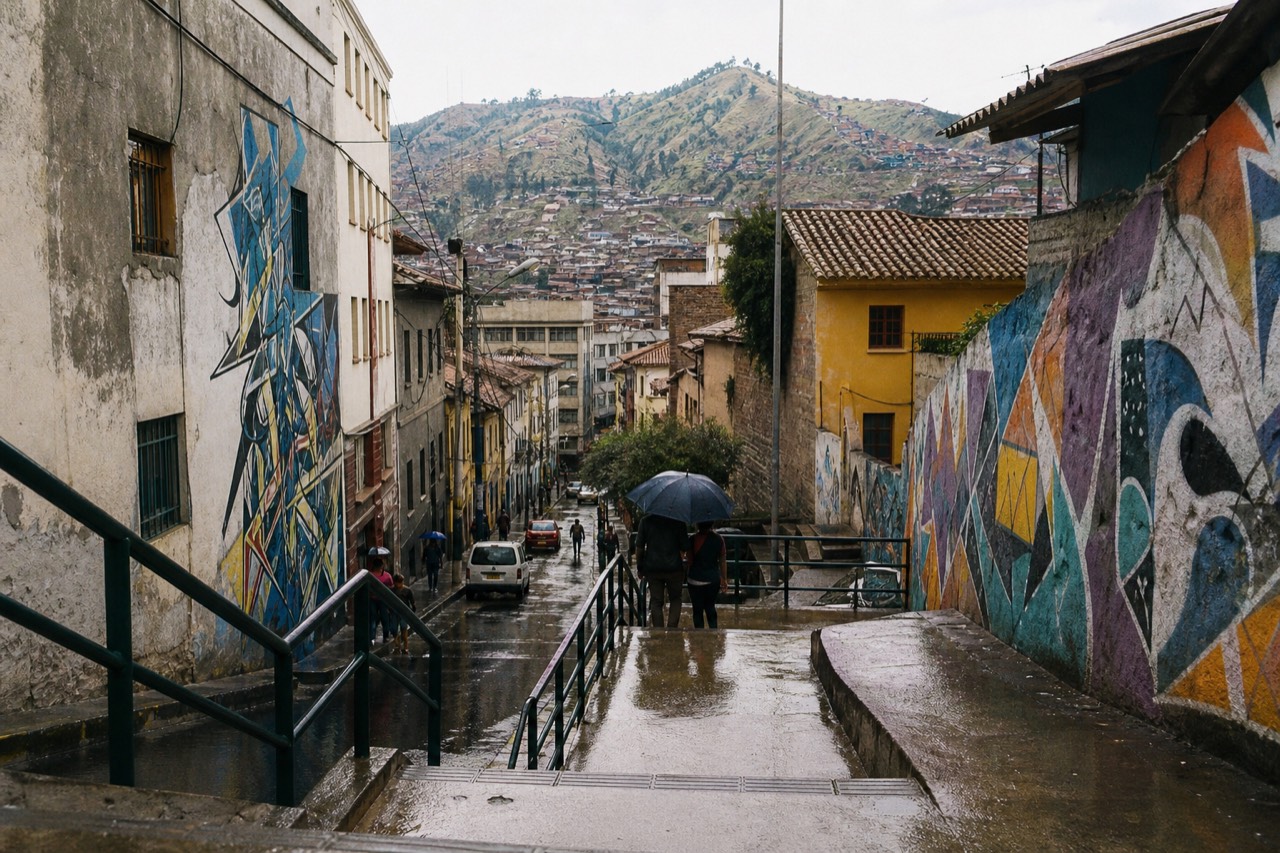
Medellín does not really have seasons in the sense most travellers mean. It has one temperature, roughly 19 to 22 degrees, held there by sitting at altitude near the equator, and it holds that temperature in January the same way it holds it in July. The city gets called the land of eternal spring for exactly this reason, and unlike most tourism nicknames it is straightforwardly accurate.
So the month you pick is not a warmth decision. It is a rain decision, and rain here is bimodal: two wet stretches and two dry ones, repeating every year.
Which months are driest, and which are wettest?
December through March is the main dry run, and January is the driest month of the year at around 112 mm. June to September is the second dry window. April and May are wet, with May the rainiest month at roughly 268 mm, and October to November is the second wet peak.
That gives you a simple shape to plan around. Two dry blocks, two wet blocks, alternating through the calendar. Nothing about the wet blocks makes travel impossible, and plenty of people have a fine trip in May, but the odds of losing an afternoon go up sharply. The dry-window mornings are also when the tandem paragliding flights above the valley fly most reliably, a separate outing from any barrio walk; check flight availability here.
| Month | Pattern | What it means for a hillside walk |
|---|---|---|
| January | Driest of the year, around 112 mm | The safest bet on the calendar |
| February | Dry run continues | Reliable, clear mornings the norm |
| March | Last of the dry stretch | Still strong, wetter toward the end |
| April | Wet season starting | Afternoon rain becomes the default |
| May | Wettest month, around 268 mm | Plan mornings only, carry a layer |
| June | Drying out again | Underrated month, fewer crowds than December |
| July | Second dry window | Good conditions, cable maintenance season starts |
| August | Dry window continues | Steady, popular with long-stay visitors |
| September | End of the second dry run | Still good, rain creeping back in |
| October | Wet peak returning | Wettest stretch after May |
| November | Second wet peak | Grey afternoons, saturated colour on the walls |
| December | Dry season resumes | Dry and festive, busier than the rest of the year |
Two nuances that a month table cannot carry. First, altitude means the rain is warm rather than cold, so being caught in it is uncomfortable rather than miserable. Second, wet-season rain in Medellín is usually a hard burst rather than a grey all-day drizzle, which is why the daily timing below matters more than the monthly column.
Does rain actually ruin a day in Comuna 13?
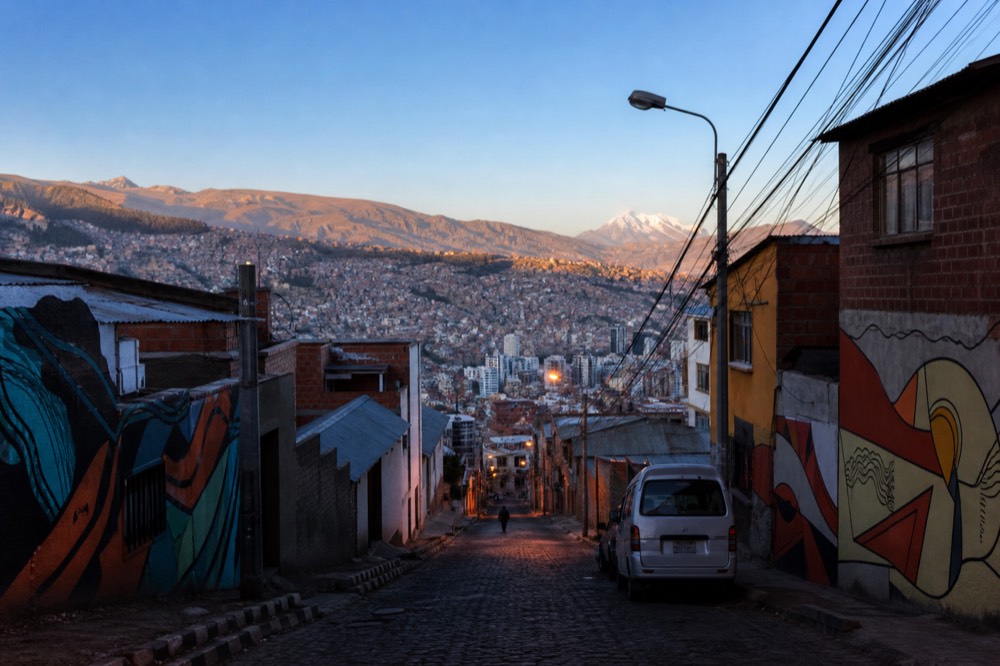
Rarely, if you go in the morning. The wet-season pattern here is dry mornings and afternoon downpours, so a walk starting between nine and eleven usually finishes before the sky turns. Even in May, morning is the reliable half of the day, which is why almost every organised walk in the barrio starts before lunch.
This is the single most useful weather fact about visiting Medellín, and it holds across both wet seasons. Cloud builds over the valley rim through the middle of the day and the rain arrives with it. A tour that begins at nine has usually done the escalators, the terraces and the food stops before anything falls.
There is a case for going anyway when it does rain. The corridor empties, the murals go deep and saturated, the light turns soft, and you get a version of the neighbourhood that the crowd photographs never show. What you need is grip on your shoes, because the landings and the old concrete stairs beside the escalators get slick fast. The full picture of how the six escalator sections work covers that in more detail, including the maintenance rotation that has been running section by section since late 2025 and gets announced through the city government of Medellín.
When is the barrio least crowded?
Weekday mornings, in any month. Sunday is the busiest day of the week by a clear margin, and the corridor took more than a million visitors during 2024, making it the most-visited place in the city. Late morning onward is peak, so a nine o'clock start is worth more to your day than any month on the calendar.
Crowd and weather point the same direction, which makes the planning easy. Go early, go on a weekday, and both problems shrink at once. December is the exception worth flagging: the weather is excellent and the city is busy with domestic holiday travel, so the corridor can feel crowded even on a Tuesday.
June is the quiet answer nobody gives. It sits at the start of the second dry window, it lacks the holiday load of December and January, and prices across the city are calmer. If you have flexibility and you are not tied to a school calendar, that is where the value sits. Choosing the right hours and days to arrive goes deeper on the daily side of this.
Which month should you book?
January if you want the best odds, June if you want good weather with fewer people, and February or July as strong alternatives. Skip May and October if you can, since those are the two wettest stretches. If your dates are fixed, book a morning slot and the month stops mattering much.
Here is the honest hierarchy. Weather quality runs January, February, July, August, then the rest. Value and calm run June, September, February. Worst combination of rain and crowd is late October into November, when the second wet peak lands without any compensating quiet.
None of it should stop you booking a trip you already have dates for. Medellín's climate is mild enough year-round that the official tourism profile for the city leans on the spring comparison rather than any seasonal warning, and the practical fix for a wet month is a start time, not a different flight.
Whatever month you land in, the food-led walks are the format least affected by weather, because half the stops are under cover and a downpour just becomes part of the morning. You can check morning departures on the five-stop street-food walk, compare the wider field on the street-food walks hub, or work through every bookable Comuna 13 tour if you would rather start from the whole list.
If your trip is still a maybe rather than a plan, the honest case for a Medellín trip covers what the city gives you beyond the weather, and you can always see the most-booked route and its available dates to check what your week actually looks like.
Frequently asked questions
What are the wettest and driest months in Medellín?
May is the wettest at roughly 268 mm, with a second wet peak in October and November. January is the driest at around 112 mm, inside the long dry run from December through March. June to September forms a second dry window that gets far less attention and comes with smaller crowds.
How hot does Medellín get?
It does not, really. The city holds roughly 19 to 22 degrees all year thanks to its altitude, which is where the eternal spring nickname comes from. Temperature is not a reason to pick one month over another here.
Is it worth visiting Comuna 13 in the rainy season?
Yes, if you go in the morning. Wet-season rain tends to arrive in the afternoon, and the crowd thins when the sky greys over. Bring shoes with grip, because the landings and the old stairs beside the escalators get slippery.
Your next step
Make room for the experience
An editorial starting point — adjust it to your plans below.
Comuna 13 food & mural walk
Have a travel date in mind? Three hours of murals, escalators and local snacks: empanadas, patacón and mango ice cream. Check the departure before arranging the rest of your day.
Meet at Garden Coffee in Comuna 13; transport is extra. Shared group, maximum 40.
Choose a date to see scheduled departures. Final availability and price are confirmed on Viator.
Times are local to Medellín. Schedules do not reserve a place.No verified option fits these choices. Adjust the filters or reset to the general recommendations.
Compare options, fit and whole-party costs
Comuna 13 True Story & street food — Hear the neighborhood story with a local guide, mural stops, empanadas and a mango popsicle. Meet at Garden Coffee; confirm the address shown for your selected booking option.
Metro, cable car & Comuna 13 — Connect the city views and mural route with metro, cable-car and bus tickets included. Allow 4½ hours; meet outside the north entrance of Poblado station.
Comuna 13 with local guides & snacks — Explore murals, escalators and local stories with a guide who grew up in Comuna 13, plus snacks and coffee or chocolate. Meet at Mestizaje Coffee Gallery. Not suitable for wheelchair users or hearing-impaired travelers.
Affiliate links support this guide. Product details checked 15 September 2026; confirm your selected option with the provider.