Comuna 13 Street Art: Murals, Artists and Viewpoints Worth Finding
The walls on this hillside were painted long before anyone came to photograph them, and a good share of what you see today was not there last year.
 By Andrés Restrepo, Comuna 13 tour guide & cultural specialist
Short answer
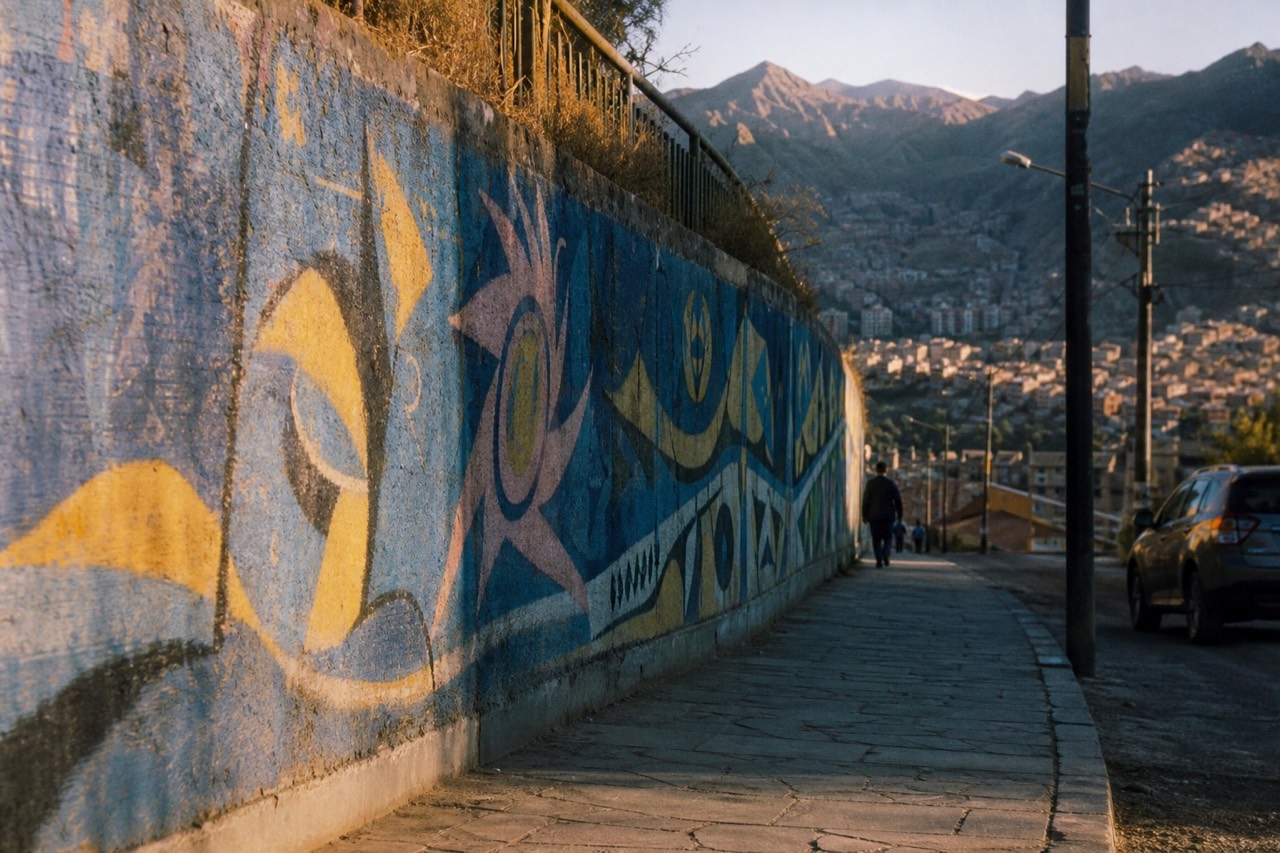
Comuna 13's murals began as a way for a neighborhood to record its own history when official accounts were contested. Local hip-hop and graffiti collectives, Casa Kolacho among them, still paint, repaint and maintain the corridor. Walls change constantly, so a guide who knows what a piece replaced is worth far more than a map of it.
Stand at the second escalator landing and look left. Half of that wall is fifteen years old and half of it went up in the last few months, and unless someone tells you which is which, you will photograph both the same way. That is the honest problem with street art on this hillside. It is not that there is too little to see. It is that the walls are a working conversation between people who live here, and a visitor with a phone catches one frame of it.
What follows is the part that does not fit on a listing page: why the painting started, who keeps it going, why pieces disappear, what the escalator corridor shows you compared with the streets two blocks off it, and how to behave in a residential neighborhood where the gallery is somebody's front wall.
Prices and review counts are August 2026 examples, not live quotes. Itinerary details were rechecked on 15 September. Confirm the final price for your date and party with the provider.
Why is Comuna 13 covered in murals?
Because the neighborhood decided to keep its own record. Hip-hop and graffiti took root here in the late 1990s and early 2000s, when official accounts of the violence were contested or absent. Painting the story on a wall put it somewhere nobody could edit, in a place the people it happened to walk past every day.
Two things follow from that origin, and both are visible on the corridor now. The first is subject matter. A lot of what you see deals with memory rather than decoration: mothers, absence, birds and keys and open hands, the number 13 worked into shapes, faces that are portraits of specific people rather than generic figures. Ask what a piece is about and the answer is often a person's name.
The second is that the art came before the audience. Kids were writing on walls in a neighborhood nobody outside was looking at, and doing it about a war happening around them. The tourism arrived roughly a decade later, after the escalators changed who could climb the hill. Getting that order right matters, and the sequence from Operation Orion to the escalators lays out how the two connect.
There is also a plain practical reason the walls are so densely painted here and not in the next comuna over. Once the corridor became a place people walked slowly, every surface along it became worth painting, and the collectives had both a reason to maintain work and an income stream to fund the paint.
Who paints the walls, and how does a piece get there?
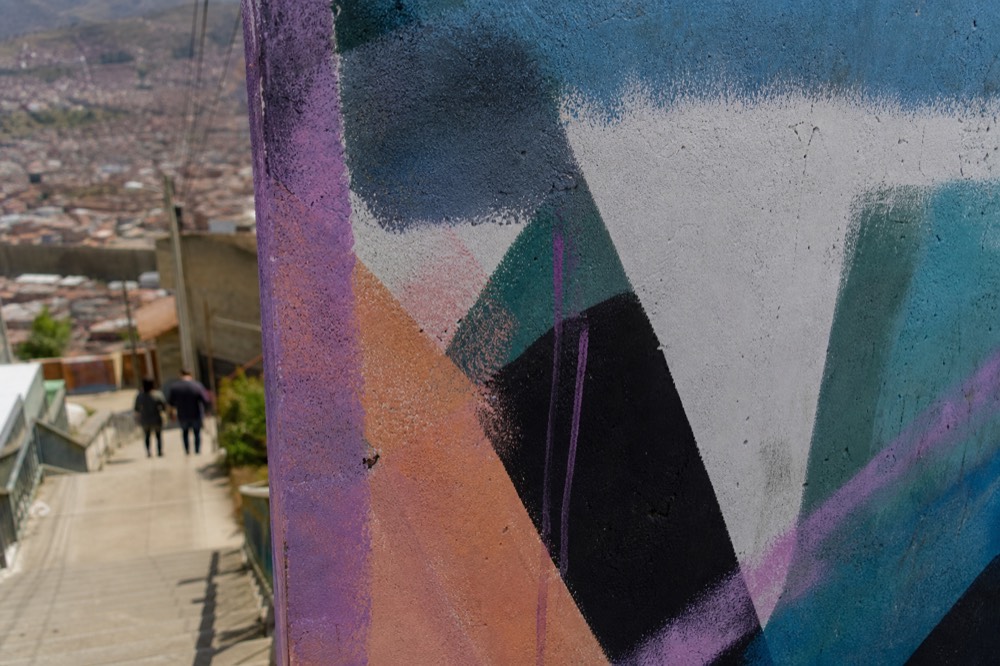
Local collectives, mostly. Writers from the barrio, many trained through the free hip-hop schools that grew here, work with the residents who own the walls. Permission is a neighborly arrangement rather than a permit process, and crews commonly maintain and repaint their own surfaces. Visiting artists appear too, usually alongside a local crew.
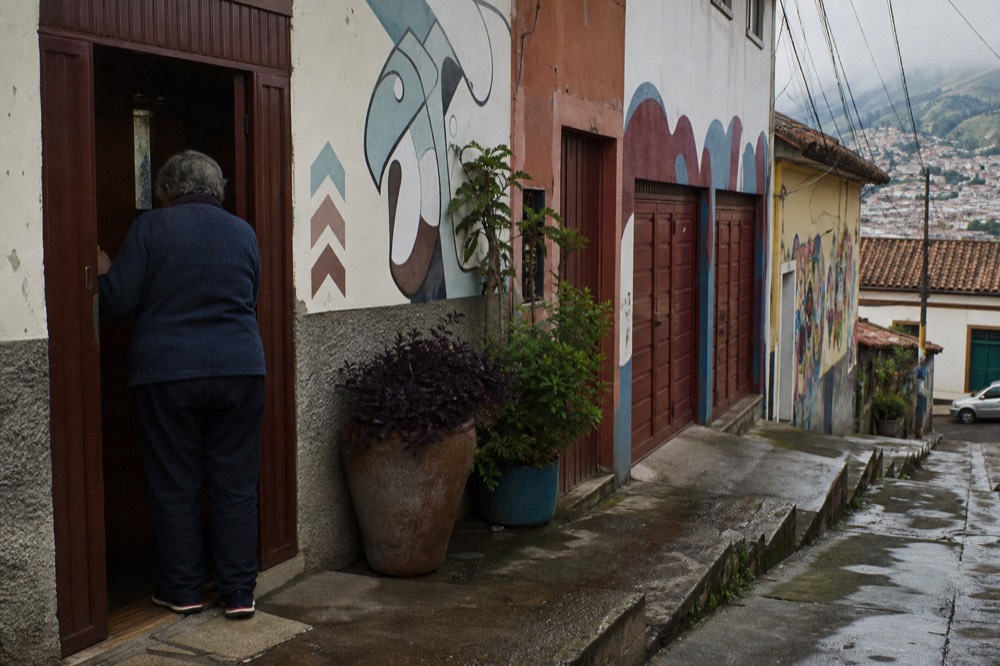
Almost every wall on this hillside is private property, the front or side of somebody's house. That single fact governs the whole scene. A piece exists because the family living behind it agreed to it, which is why the art tends to stay on speaking terms with the neighborhood's own view of itself, and why work that residents dislike does not last.
Individual artists here are known by tag names, and this guide does not match specific pieces to specific people. Attribution shifts, crews collaborate, and a wall credited to one writer online is often the work of three. If you want a name for something you are looking at, ask the guide standing next to you, who probably knows the person.
Casa Kolacho is the exception worth naming, because it is an institution rather than a signature. It is a community hip-hop house offering free classes in rap, graffiti, breaking and DJing, it takes its name from a local rapper killed in 2009, and the guide collectives that run much of the walking-tour scene grew out of it.
What is a graffitour, and what does it include?
A graffitour is a guided walk along the painted corridor, usually two to four hours, run by guides from the barrio. Most begin at San Javier station or on the lower streets, climb through the escalator sections with stops at murals and viewpoints, and mix the neighborhood's history with the art. Snacks and street performances are common inclusions.
The format started as an extension of the hip-hop schools rather than a travel product. Tours funded the free classes and, just as importantly, kept the storytelling in local hands. That heritage is why the good versions of this walk feel less like a monument tour and more like being shown around by somebody's older brother.
Practically, the differences between the twelve bookable versions come down to four things: group size, whether the metro and cable car are included, how much food is built in, and whether the guide grew up on the hill. Price barely separates them, since almost everything shared sits between $14 and $28.
| What the walk covers | Typical shape | Why it matters |
|---|---|---|
| Group size | 10 to 15 on small-group walks, up to 40 on the big shared ones | Decides whether you can ask questions or just listen |
| Transit included | Some start at a central meeting point, others fold in the metro and the cable car | The cable-car leg shows the wider comuna, not just the corridor |
| Food | Snacks and a drink on most, five stops on the food-led versions | Turns a two-hour walk into a three-hour one |
| Guide origin | Barrio-born on the community-led walks | Changes what gets said at the difficult stops |
| Duration | 2 to 3 hours short, 3 to 4 standard, 7 to 8 on full-day city combos | Longer is not automatically deeper |
If you would rather do it unguided, that is a real option on a well-policed daytime corridor, and walking the corridor unguided sets out what you gain and what you miss. The short version: you will see the same walls and understand about a third of them.
How often do the murals change?
Constantly, and faster along the corridor than off it. Outdoor paint on a wet-season hillside fades, crews repaint their own surfaces, walls get resold to new work, and buildings get extended upward. Any specific mural you saw in a photograph a year ago may be gone, which is the strongest argument for a guide over a map.
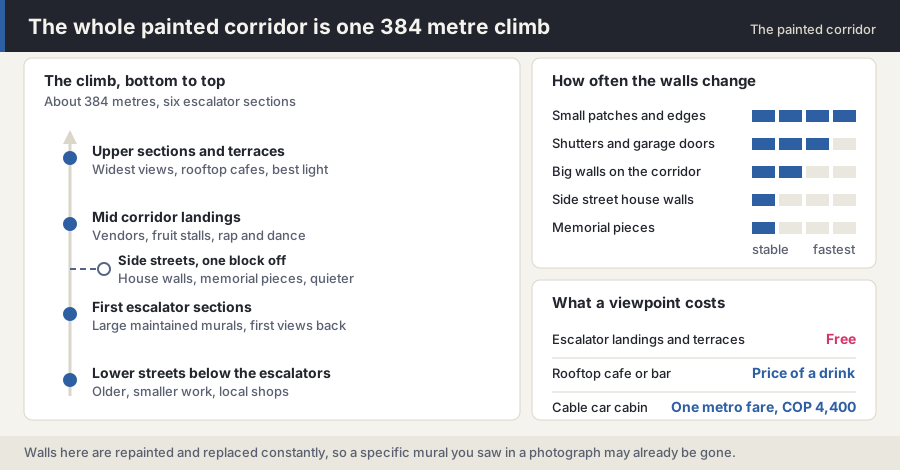
Nobody publishes a repaint schedule, so treat the pattern below as how the corridor behaves rather than a rule. Medellin's wetter stretches around April to May and October to November are hard on exposed pigment, and the most-photographed surfaces get the most attention from their makers because they are effectively a portfolio.
| Surface | How it tends to behave | What drives the change |
|---|---|---|
| Big corridor walls beside the escalators | Maintained and refreshed; the composition often survives, the colour gets renewed | Visibility, wear from weather, the crew's own standards |
| Shutters and garage doors | Change often | The business changes, or the owner wants something new |
| Side-street house walls | The most stable work on the hill | Personal meaning to the family living behind them |
| Small blank patches and edges | Turn over fastest | Practice space, new writers, quick pieces |
| Anything at ground level on a stairway | Scuffs and gets touched up | Foot traffic, shoulders, shopping bags |
| Memorial pieces | Repainted rather than replaced | The subject is a real person and the family is nearby |
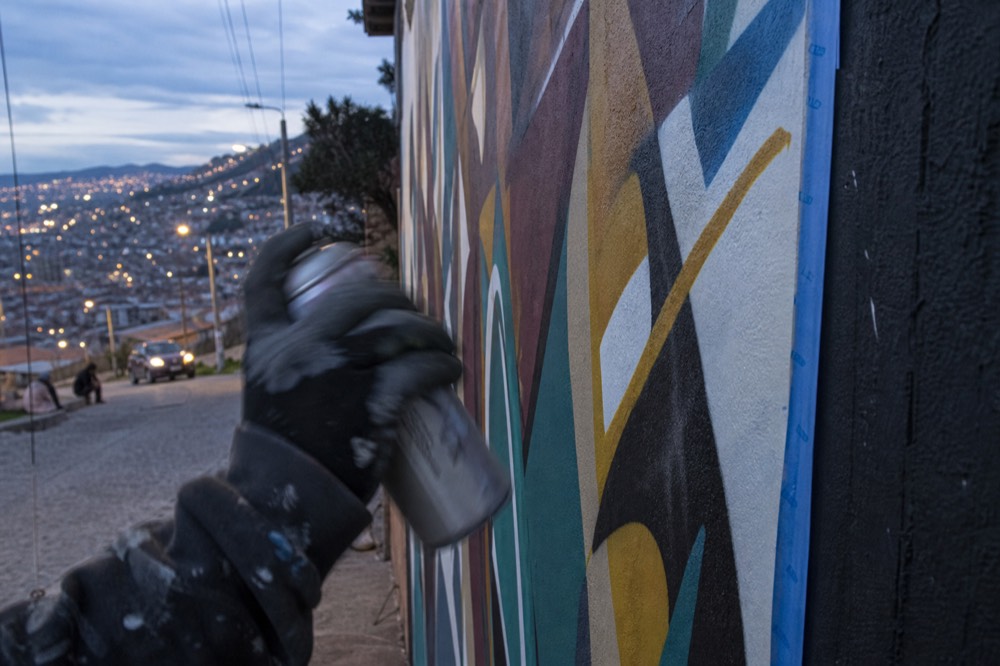
The practical consequence for a visitor is small but real. Do not build a visit around finding one particular mural you saw online. Build it around understanding the corridor, and treat whatever is on the walls that week as the current state of a conversation that has been running for twenty years.
What does the escalator corridor show that the side streets do not?
The corridor is the curated version: the largest pieces, the maintained work, the viewpoints, the vendors and the performances, all inside about 384 metres of climb. The side streets are the residential version, quieter, older, less polished, with work that was painted for neighbors rather than cameras. Both are worth ten minutes.
Nearly every guided walk runs the corridor, because it is where the density is and because six free escalator sections make a punishing climb into a manageable one. The mechanics of the ride, including which section is closed for maintenance in a given week, are in riding the corridor flight by flight.
| Stretch of the walk | What you meet there | Why it earns the stop |
|---|---|---|
| Lower streets below the escalators | Older, smaller work, local shops, less foot traffic | The neighborhood before the corridor effect |
| First escalator sections | Large maintained murals, the first viewpoints back over the valley | Where most groups get their orientation and the history opens |
| Mid-corridor landings | Vendors, fruit and ice stalls, souvenir tables, performances | The local economy the tourism actually feeds |
| Upper sections | Panoramic terraces, rooftop cafes, the widest views | Best light and the clearest sense of how steep the hill is |
| Side streets one block off | House walls, memorial pieces, residents going about a normal day | The work with the least performance in it |
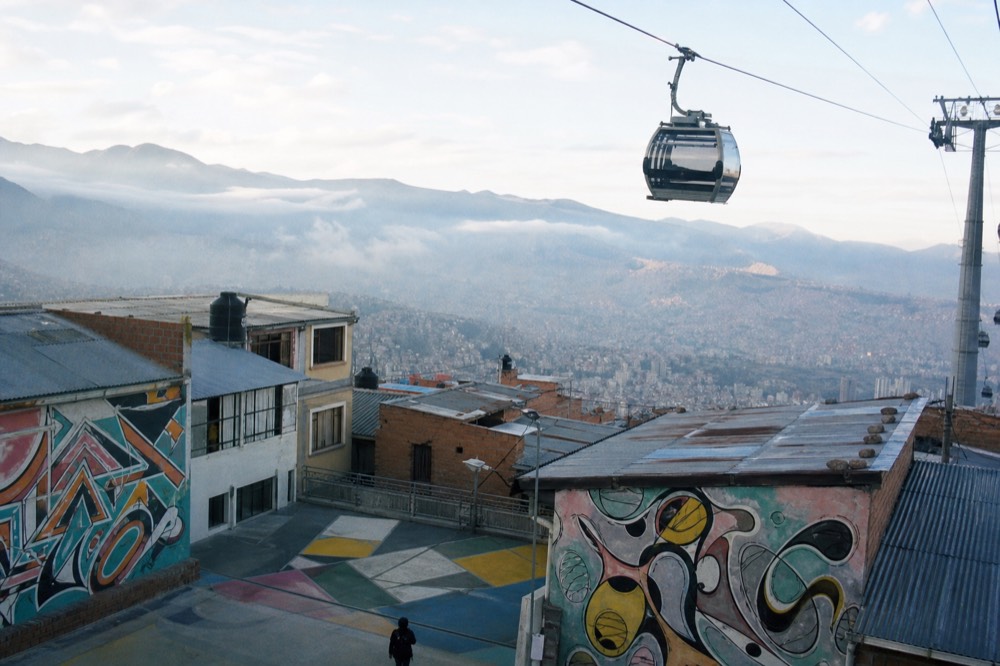
| The cable-car line across the comuna | Rooftops, courtyards and the scale of the wider district | Shows how small the visitor corridor is by comparison |
That last line is the one most visitors miss. The painted corridor is a narrow strip inside a comuna of roughly 160,000 people, and riding the cable car over the rest of it rearranges your sense of proportion in about four minutes.
Which viewpoints are worth climbing for?
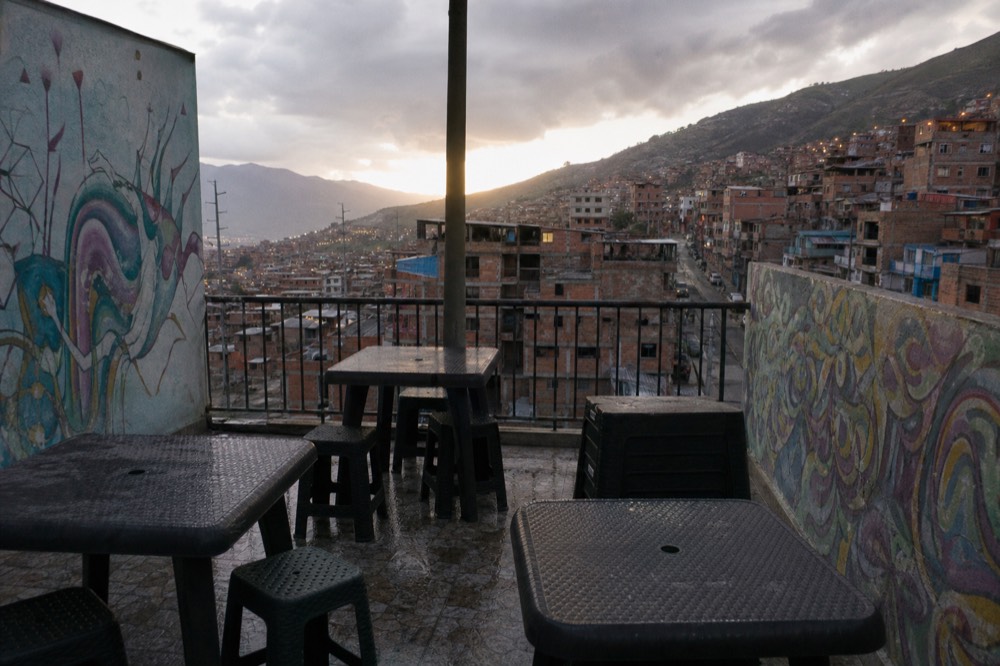
The terraces at the top of the upper escalator sections, where the hillside opens onto the valley. Standing on them is free. The rooftop cafes and bars behind them charge for a drink and a seat, which on a hot afternoon is money well spent. Morning light works better than afternoon, and afternoon rain is common.
There is no single official mirador with a ticket booth. What exists is a series of landings, terraces and rooftop spaces that opened as the corridor filled with visitors, most of them family businesses on the top floor of a house. The view is the same from several of them, so pick on shade and seating rather than reputation.
| Viewpoint type | What you see | Cost |
|---|---|---|
| Escalator landings | The valley opening up between houses, murals at close range | Free |
| Upper terraces | Wide view down the slope and across Medellin | Free to stand on |
| Rooftop cafes and bars | The same view with shade, a seat and a fan | Price of a drink |
| Cable-car cabin | Rooftops and courtyards of the wider comuna, above the corridor | One integrated metro fare |
| Street-level gallery courtyards | Work in progress and pieces for sale | Free to enter, art costs money |
Timing changes all of this more than location does. Sundays are the busiest day on the corridor and late morning onward is peak, so the terraces that feel spacious at nine can be shoulder to shoulder by one. Medellin sits around 19 to 22 degrees year-round with wetter stretches in April and May and again in October and November, and mornings reliably beat afternoon rain. The quietest hours on the corridor has the day-by-day version.
What are the rules for photographing the art and the people?
Photograph the walls freely. Photograph residents only with a clear yes, and never through a doorway or window. Pay the performers you film, buy from the vendor whose stall is in your frame, and put the phone down when the guide is explaining a memorial. Nothing here is staged for you, which is exactly why it works.
The corridor is a home address for thousands of people, and the cost of the tourism falls on them in small daily ways: noise, crowding on the stairs they use to get to work, cameras pointed at their laundry. Almost every friction between visitors and residents traces back to somebody forgetting that.
| Do | Do not |
|---|---|
| Shoot the murals, the escalators and the views as much as you like | Photograph people in their own doorways, windows or homes |
| Ask before a portrait, and accept a no without negotiating | Film children at all |
| Tip the dancers and rappers who perform on the landings | Record a full performance and walk off without paying |
| Buy fruit, drinks or art from the stalls you are standing in | Haggle hard over a 5,000 peso fruit cup |
| Step aside on the stairs for residents carrying loads | Block a landing for a group photo while people are trying to pass |
| Follow the guide's lead at memorial pieces | Pose smiling in front of a mural about somebody's disappearance |
| Keep the phone in a front pocket in dense crowds | Wave a camera around on the outer streets after dark |
Petty theft in crowds is the realistic risk here, not anything more dramatic, and the corridor is heavily walked and policed in daylight. The fuller picture, including what changes after dark, sits in the safety guide rather than this one.
Can you paint your own piece?
Yes. A workshop option pairs the standard history and mural walk with a hands-on session: cans, a practice surface, and a guide who writes, walking you through cap control, fill and outline. It runs about four hours at $24 and carries a 5.0 rating across 502 reviews, the highest-rated format among the twelve walks here.
The appeal is not that you will produce anything good. It is that twenty minutes of trying to hold a clean line with a spray can permanently changes how you read the wall behind you. Scale, control and speed become visible, and the pieces on the corridor stop looking like decoration and start looking like work.
| Standard walk | Workshop version | |
|---|---|---|
| Typical length | 2 to 4 hours | About 4 hours |
| From | $14 to $28 | $24 |
| What you do | Walk, listen, photograph, eat | All of that, then paint |
| Best for | First visit, tight schedule, big groups | Anyone who draws, teenagers, repeat visitors |
| Rating | 4.7 to 5.0 across the shared walks | 5.0 across 502 reviews |
| What you take home | Photographs | A piece you made, plus the photographs |
The food-led walks are the other direction to take the same corridor, and walks that stop to eat build five or so tastings into the climb. If the hands-on version is the one that appeals, you can check what the graffiti workshop includes and compare its dates against the standard walks before booking.
What counts as street art here besides paint?
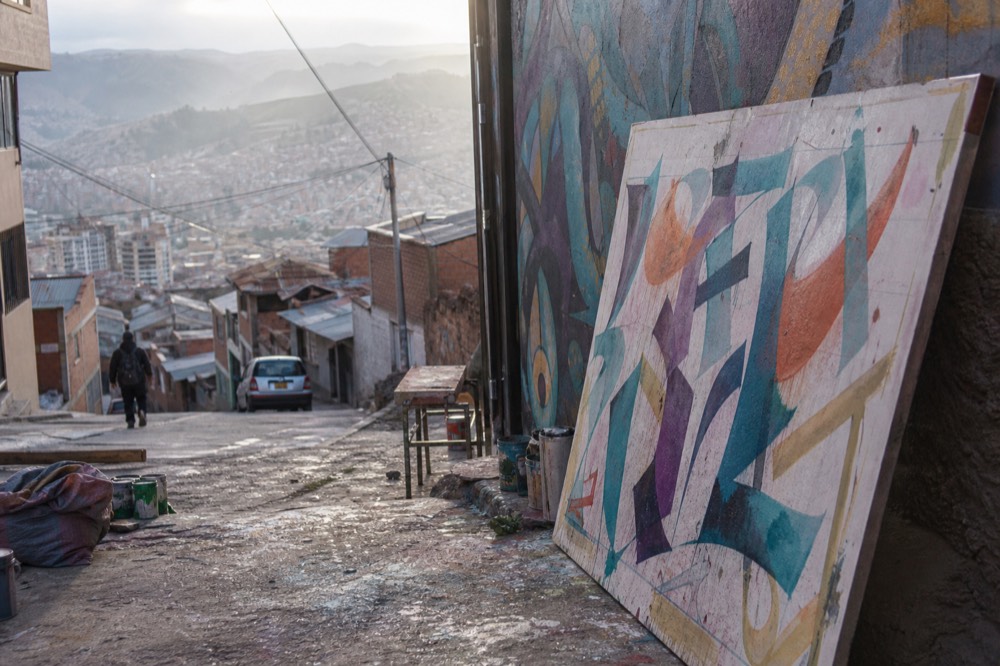
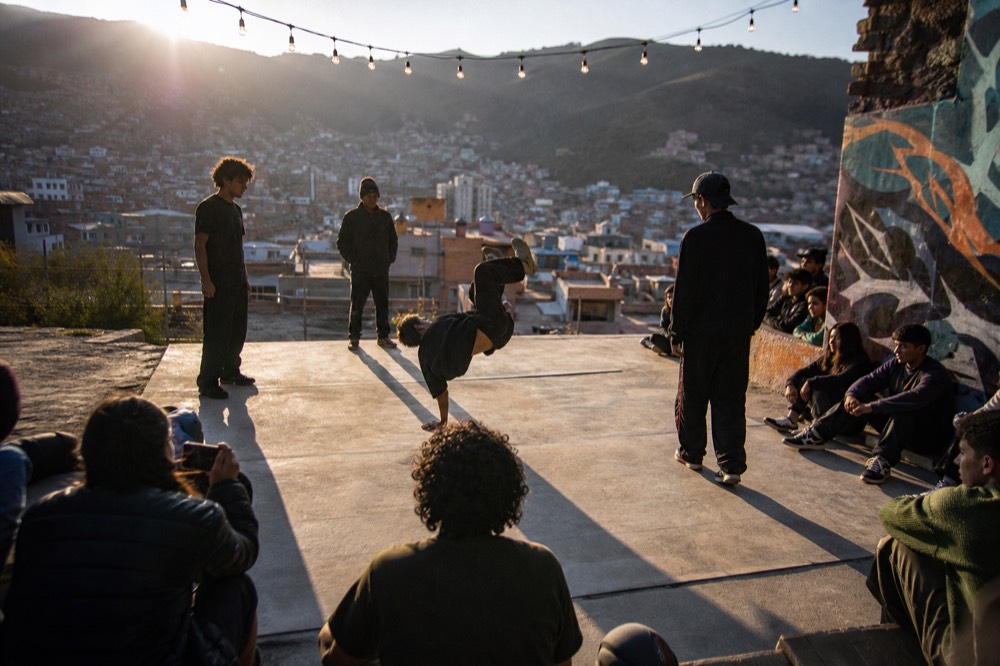
Four forms, all of them from the same hip-hop roots: graffiti and murals, rap performed live on the landings, breaking on the flat concrete platforms, and small galleries and studios selling prints and canvases. Treat the performances as part of the art rather than an interruption, and pay for them the way you would pay for a gallery ticket.
The four elements arrived together in this neighborhood, through the same free classes, taught by the same people. That is why a walk here regularly stops for a two-song rap set halfway up a staircase, and why the person selling you a small canvas at the top may have been dancing on a landing an hour earlier.
| Form | Where you meet it | How to support it |
|---|---|---|
| Murals and graffiti | The corridor walls, shutters, stairways and side streets | Buy prints, postcards or canvases from the artists' own stalls |
| Rap and live performance | Landings and small platforms along the climb | Cash tip after the set, not before |
| Breaking and dance | Flat concrete platforms and terraces | Same, and give the crew room to work |
| Galleries and studios | Courtyards and ground floors just off the corridor | Buy the work, or the coffee |
| Free classes for local kids | Community hip-hop houses off the main route | Book a community-led walk; the model funds the teaching |
When should you go if you want to actually see the walls?
Early morning, ideally a weekday. The corridor opens up around nine, the light hits the west-facing walls without glare, the terraces have room, and rain is least likely. By late morning the stairs are dense, by Sunday afternoon they are packed, and a crowded landing makes both photography and listening hard.
Weather does most of the scheduling for you. Medellin runs 19 to 22 degrees year-round, so temperature is never the issue, but May is the wettest month at around 268 millimetres and January the driest at about 112. Afternoon showers are the standard pattern in the wet stretches, and there is very little cover on the corridor.
Crowd level changes what kind of visit you get more than any other variable. On a quiet morning, guides stop where they want and the performers play to a group rather than a wall of phones. On a peak Sunday you are moving in a queue. If the schedule only allows an afternoon, the smaller-group walks handle the crush better than the forty-person versions, and the free tip-based option still runs, listed daily on marketplaces like the Medellin free-walk listings, with what a tip-based walk really costs covering the working tip range and where the free walks meet.
One last piece of orientation. The walls are the reason people come, but they are not the reason the neighborhood painted them, and the gap between those two facts is what a good guide spends three hours closing. Every bookable walk compared side by side is the fastest way to pick one, whether the walk is worth your morning answers the doubt most people arrive with, and the official Medellin travel material covers the rest of the city around it. Maintenance notices for the escalators are posted through the city's own channels.
Frequently asked questions
Is the street art in Comuna 13 legal?
Yes, in practice. Almost every painted surface on the corridor is private property, and the pieces exist because the residents who own those walls agreed to them. Local collectives coordinate the work, maintain their own surfaces and repaint them when weather or wear takes a toll. It is a neighborly arrangement rather than a formal permit system, which is also why work that residents dislike tends not to last long.
Do you need a guide to see the murals?
You can walk the corridor unguided in daylight without difficulty; it is well travelled and policed, the escalators are free, and nothing charges admission. What you lose is the meaning. Many pieces refer to specific events and specific people from the neighborhood's history, and murals change often enough that any map you find online will be partly out of date. Guides from the barrio know what a wall replaced and why.
Can visitors paint graffiti in Comuna 13?
Not on their own, and not on somebody's house. The legitimate way to do it is the workshop format, which pairs the standard history and mural walk with a hands-on session: cans, a practice surface and a guide who writes. It runs about four hours from $24 and carries a 5.0 rating across 502 reviews. Painting an unsanctioned wall in a residential neighborhood is straightforwardly rude and would not be welcome.
Is it OK to take photos of people in Comuna 13?
Photograph the art freely and the residents only with a clear yes. Never shoot into doorways, windows or homes, and do not photograph children. Performers on the landings are working, so if you film a rap set or a dance routine, tip afterwards. The corridor is a home address for thousands of people, and the small courtesies are what keep a residential neighborhood willing to host a million visitors a year.
What is Casa Kolacho?
A community hip-hop house in Comuna 13 that runs free classes in rap, graffiti, breaking and DJing, named for a local rapper killed in 2009. It is the institution most closely associated with the neighborhood's graffiti scene and with the community-led walking tours, which grew out of the same model: the tours help fund the classes and keep the barrio's history in the hands of people who lived it.
Your next step
Make room for the experience
An editorial starting point — adjust it to your plans below.
Comuna 13 food & mural walk
Have a travel date in mind? Three hours of murals, escalators and local snacks: empanadas, patacón and mango ice cream. Check the departure before arranging the rest of your day.
Meet at Garden Coffee in Comuna 13; transport is extra. Shared group, maximum 40.
Choose a date to see scheduled departures. Final availability and price are confirmed on Viator.
Times are local to Medellín. Schedules do not reserve a place.No verified option fits these choices. Adjust the filters or reset to the general recommendations.
Compare options, fit and whole-party costs
Comuna 13 True Story & street food — Hear the neighborhood story with a local guide, mural stops, empanadas and a mango popsicle. Meet at Garden Coffee; confirm the address shown for your selected booking option.
Comuna 13 art & graffiti workshop — Walk with local guides, taste neighborhood snacks and learn spray-paint technique on dedicated practice walls. Three hours, maximum 10, Insiders Foundation meeting point. Not suitable for wheelchair users or hearing-impaired travelers.
Comuna 13 with local guides & snacks — Explore murals, escalators and local stories with a guide who grew up in Comuna 13, plus snacks and coffee or chocolate. Meet at Mestizaje Coffee Gallery. Not suitable for wheelchair users or hearing-impaired travelers.
Affiliate links support this guide. Product details checked 15 September 2026; confirm your selected option with the provider.