What does Comuna 13 mean?
Medellin is divided into 16 numbered comunas. Number 13 is San Javier, on the western slope. Here is how an administrative label became a global name.
 By Andrés Restrepo, Comuna 13 tour guide & cultural specialist
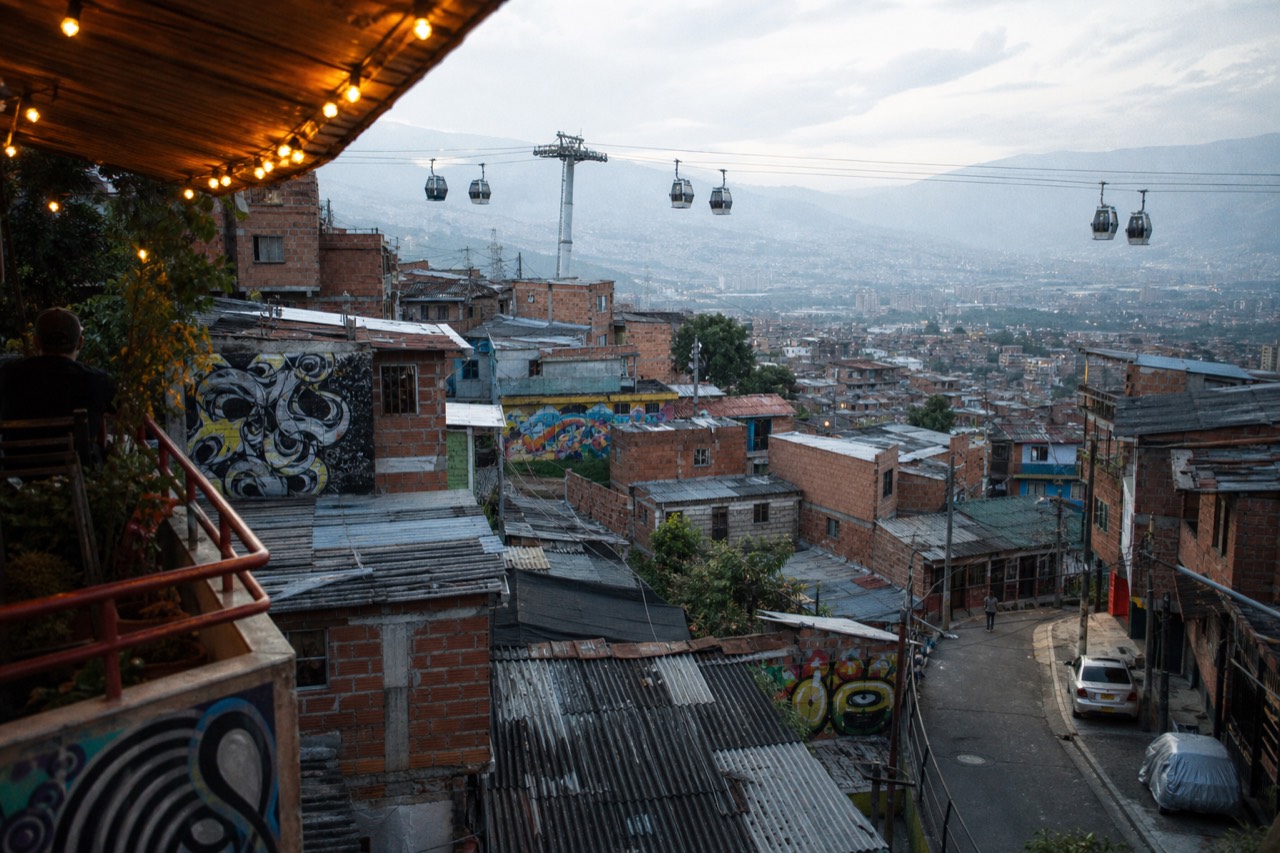
Sixteen. That is how many comunas Medellín is divided into, and the only reason anyone outside Colombia knows the number thirteen is that the thirteenth one had a decade that made the news. The word itself carries no drama. A comuna is an administrative urban district, the same kind of unit a planning office anywhere uses to divide a city for budgets, censuses and services, and Medellín numbered its own from one upward.
So the honest answer to what the name means is dull, and the interesting part is everything that happened after.
What does Comuna 13 mean?
Comuna 13 means urban district number 13 of Medellín. The city is split into 16 numbered comunas for administrative purposes, plus rural corregimientos. District 13 carries the official name San Javier and sits on the steep western edge of the Aburrá valley. The number is a filing label that turned into a place name.
Nothing about the number is symbolic. It is not a rank, not a danger rating, not a gang designation. Comunas 1 through 16 cover the urban area, and the surrounding rural districts use a different term entirely.
What makes this one different is that the label escaped. Nobody says "Comuna 8" in a travel article. The thirteenth district became shorthand for a specific story: a hillside settled largely by people displaced from the countryside, a long period of armed control, the largest urban military operation in Colombia's recent history in October 2002, and then a slow, contested, genuinely remarkable turn toward public infrastructure and public art. The number came along for the ride.
You will hear locals shorten it further. "La 13" is the everyday version, said the way someone in London says "the East End". It is affectionate more often than not, and it is used by residents about their own home far more freely than by outsiders about it.
How does Medellín's comuna system work?
A comuna is an urban administrative district. Medellín has 16 of them covering the built-up city, each containing many individual barrios with their own names and their own neighbourhood boards. The comuna is the level the city budgets and plans at. The barrio is the level people actually live at.
That two-tier structure explains most of the confusion visitors run into. Ask someone in the corridor where they live and they will name a barrio, not a number. The comuna is the container. The barrios inside it are the places.
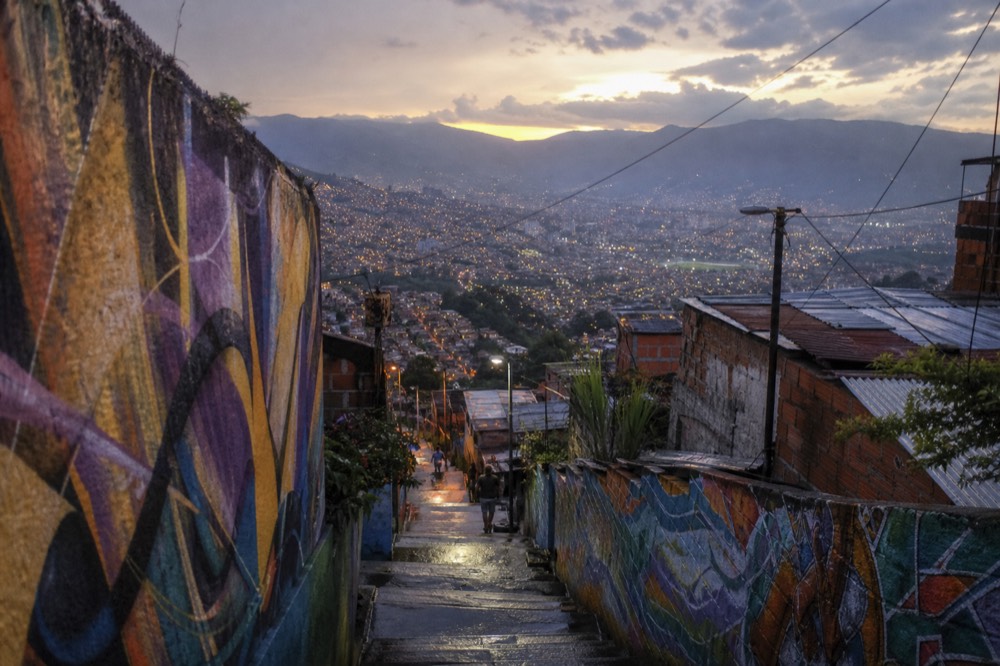
It also explains why the same patch of hillside answers to several different names depending on who is speaking and why. City hall says Comuna 13. The metro map says San Javier. A resident says Las Independencias, or names their own street. A tour listing says Comuna 13 because that is the name that travels.
| Layer | The name | What it actually refers to | Where you meet it |
|---|---|---|---|
| Administrative district | Comuna 13 | One of Medellín's 16 numbered urban districts | City documents, news coverage, tour listings |
| Official district name | San Javier | The same district, by its proper name | Street signs, maps, city planning papers |
| Metro station | San Javier | Western terminus of metro Line B | Transit maps and station announcements |
| Cable car line | San Javier to La Aurora | Line J, running over the hillside | The metrocable network, one integrated fare |
| Barrio | Las Independencias | The neighbourhood the escalator corridor climbs | The corridor itself, local conversation |
| Everyday shorthand | La 13 | The whole district, informally | Spoken Spanish, music, local speech |
| Global shorthand | Comuna 13 | The story, the murals, the escalators | Travel media, guidebooks, search results |
Read that table downward and you can watch a bureaucratic number turn into a brand. The top three rows are paperwork. The bottom two are culture.
Why is the district also called San Javier?
San Javier is the district's official name and the one the transport network uses. Metro Line B terminates at San Javier station, and the Line J cable car runs from there up over the hillside to La Aurora on a single integrated fare. If you are reading a map or a timetable, San Javier is the word you need.
This trips people up constantly. Visitors search for a metro stop called Comuna 13, find nothing, and assume the neighbourhood is hard to reach. It is not. It sits at the end of a metro line, about fourteen minutes of travel from El Poblado with one change, and the station is simply filed under the district's proper name.
The cable car adds the second half of the geography lesson. Line J lifts out of San Javier and crosses the slope, which is the only way to understand how steep and how dense this hillside is. From a cabin you can see the whole comuna at once: the ridgelines, the brickwork, the corridor cutting up through it. Tours built around that ride treat the transit itself as the attraction, and you can see what the cable-car district route covers alongside the metrocable routes above San Javier if the aerial view is the part you want.
How did a district number become a global name?
Through a sequence: displacement and armed control through the 1990s, the October 2002 military operation, then a deliberate bet on public infrastructure. The outdoor escalators opened in 2012, the graffiti and hip-hop scene grew around them, and by 2024 the corridor was taking over a million visitors a year as Medellín's most-visited site.
The turning point everyone cites is the 2002 operation, which put the number into national headlines for the first time. What kept it there was the opposite kind of news. A city that had been famous for one thing began pointing at a hillside and saying: look what we built here instead.
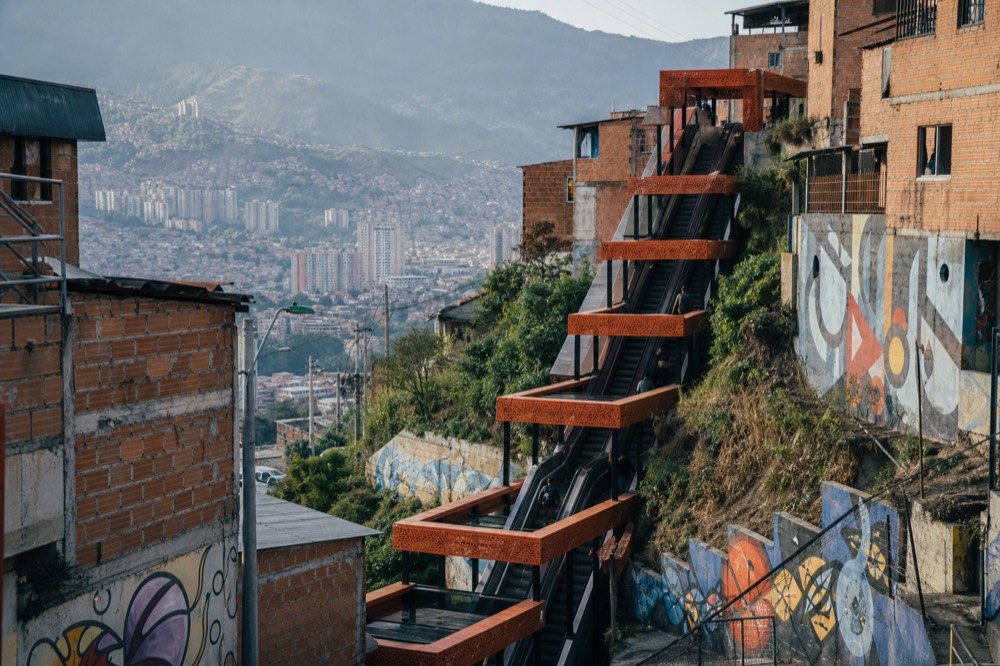
The escalators are the clearest symbol of that. Six sections of outdoor escalator, climbing a slope that used to be a punishing flight of concrete steps, installed as public transport for residents rather than as an attraction. They became an attraction anyway. Around them grew the mural corridor, the collectives, the tours, and eventually a visitor volume that the neighbourhood is still learning to absorb.
That is why the administrative number is now the name on posters. It stopped meaning "district 13 of the municipality of Medellín" and started meaning a particular story about what a city can do with a hillside. The full sequence is set out in the timeline from displacement to escalators, and what made the name travel covers the tourism side of it.
Which name should you use when you are there?
Comuna 13 is fine and universally understood. San Javier is what you need on the metro. Las Independencias is the barrio the corridor sits in. Avoid the labels that describe the district by its worst decade, because residents live here now and hear all of it.
Language matters more here than in most places a traveller visits, mostly because the neighbourhood spent twenty years being described by outsiders. Naming it by its number is neutral. Naming it by its violence is not, and the question of whether the slum label fits is worth reading before you use any word you picked up from a documentary.
Practically, the words you need are short. Ask for San Javier on the metro, or "las escaleras" for the escalators. Say Comuna 13 to a taxi driver and you will be understood at once. And if you want to know who painted a particular wall, that answer sits in who paints the corridor now rather than on the wall, because almost none of it is captioned.
Medellín's own tourism material, including the official city pages, uses both names interchangeably, which tells you the city stopped fighting it some time ago. The number won. What the number means now is largely up to whoever is describing it, and after a million-plus visitors in a single year, that includes you.
Common questions
How many comunas does Medellín have?
Sixteen numbered urban comunas cover the built-up city, each containing many individual barrios. Rural areas around the city are organised separately as corregimientos rather than comunas. Comuna 13 is one of the sixteen, sitting on the western slope of the valley.
Is Comuna 13 the same place as San Javier?
Yes. San Javier is the official name of Medellín's district 13, and it is the name used on the metro network, where San Javier is the western terminus of Line B. Comuna 13 is the administrative number for exactly the same area.
Why do people call it La 13?
It is the everyday spoken shortening, used mostly by people from Medellín and especially by residents of the district itself. It carries no negative charge on its own. Outside Colombia the full form Comuna 13 is far more common, largely because that is the version travel media adopted.
What does comuna mean in Spanish?
In this context it means an urban administrative district, a unit a city uses for planning, budgeting and public services. It does not imply anything about income, danger or informality. Several Colombian cities divide themselves into numbered comunas in exactly the same way.
Your next step
Make room for the experience
An editorial starting point — adjust it to your plans below.
Metro, cable car & Comuna 13
Have a travel date in mind? Connect the city views and mural route with metro, cable-car and bus tickets included. Check the departure before arranging the rest of your day.
Allow 4½ hours; meet outside the north entrance of Poblado station.
Choose a date to see scheduled departures. Final availability and price are confirmed on Viator.
Times are local to Medellín. Schedules do not reserve a place.No verified option fits these choices. Adjust the filters or reset to the general recommendations.
Compare options, fit and whole-party costs
Comuna 13 with local guides & snacks — Explore murals, escalators and local stories with a guide who grew up in Comuna 13, plus snacks and coffee or chocolate. Meet at Mestizaje Coffee Gallery. Not suitable for wheelchair users or hearing-impaired travelers.
Private Comuna 13 & metrocable — Your own guide, central Medellín hotel pickup and a three-hour Comuna 13/metrocable route. Priced per person, with food and tips extra. Confirm the precise pickup address and any mobility needs before booking.
Comuna 13 True Story & street food — Hear the neighborhood story with a local guide, mural stops, empanadas and a mango popsicle. Meet at Garden Coffee; confirm the address shown for your selected booking option.
Affiliate links support this guide. Product details checked 15 September 2026; confirm your selected option with the provider.