Why is Comuna 13 so famous?
The short answer is speed. A Medellin hillside went from urban war to the city's most-visited place in twenty years, and the change is visible from the street.
 By Andrés Restrepo, Comuna 13 tour guide & cultural specialist
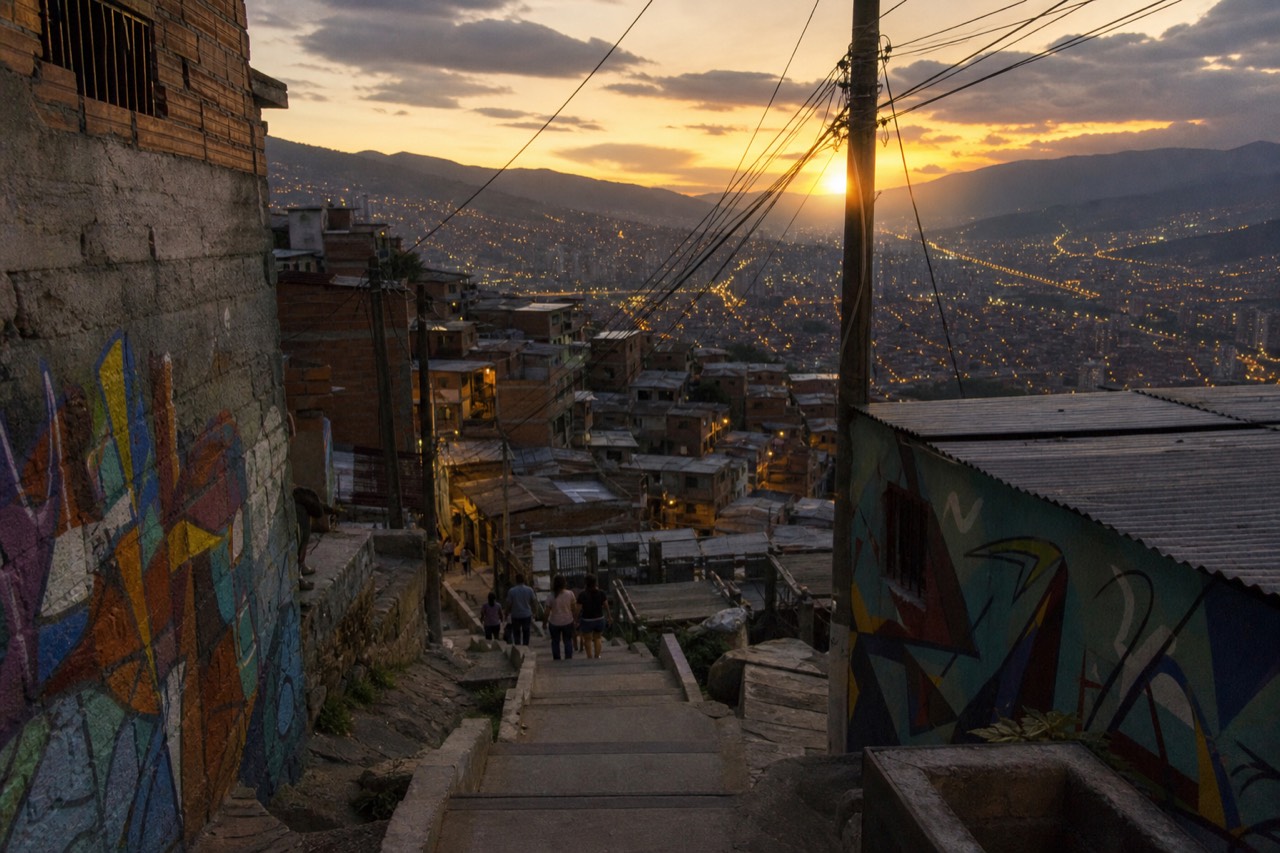
The fame has a shape, and it is not really about murals. A hillside that outsiders avoided for a decade became the most-visited place in Colombia's second city inside about twenty years, and unusually for an urban turnaround, you can stand in one spot and see the mechanism: the escalators that made the slope climbable, the walls that record what happened before them, and the people who painted both.
Prices and review counts are August 2026 examples, not live quotes. Itinerary details were rechecked on 15 September. Confirm the final price for your date and party with the provider.
What made Comuna 13 famous in the first place?
Violence, then reversal. Through the late 1990s the district was fought over by militias, guerrilla units and paramilitary blocs, and in October 2002 it was the target of Operation Orion, the largest urban military operation in Colombia's recent history. That reputation is what makes the current version so striking to visitors.
Comuna 13 is San Javier, District 13 of Medellin, one of sixteen comunas and the one climbing the western mountain wall. The road out toward the Caribbean coast passes below it, which made the hillside strategically valuable and turned a neighborhood of self-built houses into a battleground. The background on Operation Orion covers the assault itself, and the full sequence, war to escalators puts it in order with what came before and after.
The part that outsiders usually miss is that the fame did not begin with tourism. It began with notoriety. For years Comuna 13 was shorthand in Colombian news for the worst thing that could happen inside a city, which is exactly why the current version registers so hard.
How did the escalators change the story?
Six sections of free outdoor escalator opened across 2011 and 2012, running about 384 metres up a slope that had been roughly 350 concrete steps. They cost around US$6 to 7 million and carry anyone, resident or visitor, at no charge. They turned a thirty-minute climb into a six-minute ride, and a closed hillside into a place people pass through.
The escalators were built as social infrastructure, not as an attraction. Elderly residents were climbing the equivalent of twenty-eight stories to get home with shopping. What nobody planned for was the second effect: once the slope was easy, shops opened at the landings, then cafes, then terraces, and the walls along the route became worth painting for an audience that had never existed before.
They also photograph extremely well, which matters more than anyone likes to admit. An orange escalator canopy stepping up a hillside of brick houses is an image that travels, and it did, through news features and then through millions of phones. What the six free escalator sections actually do has the practical detail, including the phased maintenance running through 2025 and 2026.
Why do a million people a year come to look at walls?
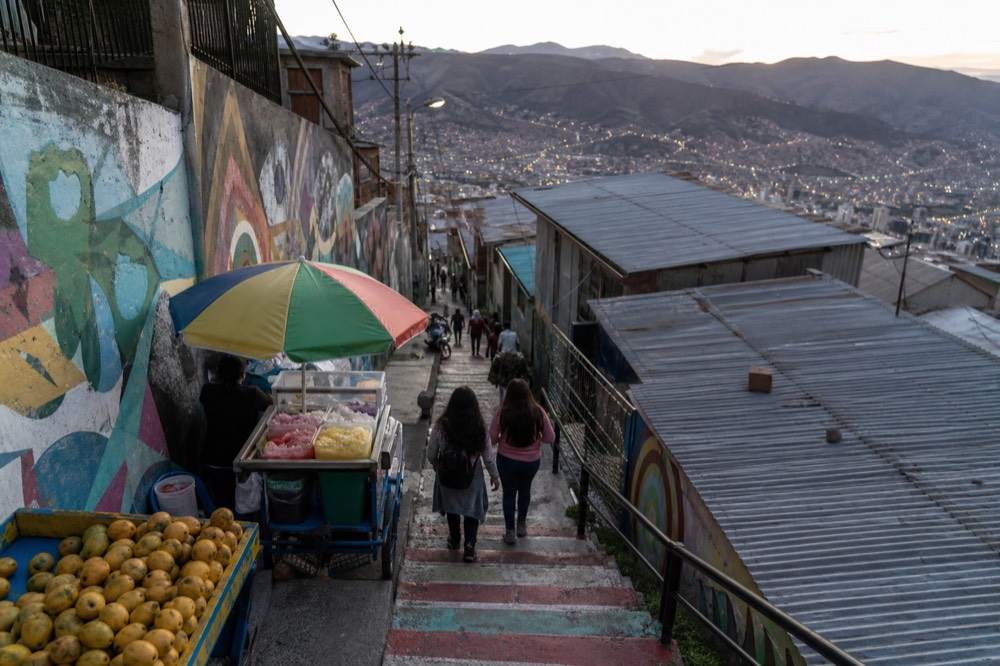
Because the walls are a record, not decoration. Local hip-hop and graffiti collectives began painting the neighborhood's own history when official accounts of it were contested. The result is an open-air gallery where almost every large piece refers to a real event or a real person, and where the artists are often standing nearby.
Add the rest of the package and the draw makes sense. The corridor is free to walk, the escalators cost nothing, there is no entry fee or tourist tax, live rap and breaking happen on the landings, the food is cheap and good, and the view down the valley from the upper terraces is the best cheap panorama in the city.
| What the fame is built on | What it is | Why it travels |
|---|---|---|
| The reversal | One of the city's most violent districts, now its most-visited site | The contrast is the story, and it is recent enough to be legible |
| The escalators | Six free sections, about 384 metres, opened 2011 to 2012 | A photograph that explains a policy in one frame |
| The murals | Community-painted history, repainted and maintained by local crews | Free, dense, changes constantly, endlessly photographable |
| Hip-hop culture | Rap, breaking, DJing and graffiti taught free through community houses | Live performance built into a walking route |
| The tours | Twelve bookable walks from $14, carrying 27,775 reviews between them | Cheap, well reviewed, guided by people from the barrio |
| The city around it | Medellin took more than a million international arrivals in 2024 | A short metro ride from where visitors already stay |
Recognition compounded it. Medellin appeared on National Geographic's Best of the World list for 2026, cited specifically for the kind of culture-led change this hillside represents, and the neighborhood is Medellin's single most-visited site by a wide margin. The official city tourism material now leads with it.
What does that fame cost the neighborhood?
Crowding and commercialization, mostly borne by residents. More than a million visitors in 2024 moved through a corridor of about 384 metres inside a comuna of roughly 160,000 people. Sundays are the worst, the stairs residents use daily fill with groups, and the money concentrates around the route while streets two blocks off see very little of it.
There is a version of this neighborhood that exists for the camera and a version people actually live in, and they overlap for a few hundred metres. Vendors and guides do well. Families whose front steps are now a photo stop do not, particularly. Reports of infrastructure strain and over-capacity have run through local coverage since 2023, and the city has started training and certifying local guides partly to keep the storytelling honest as the trade grows.
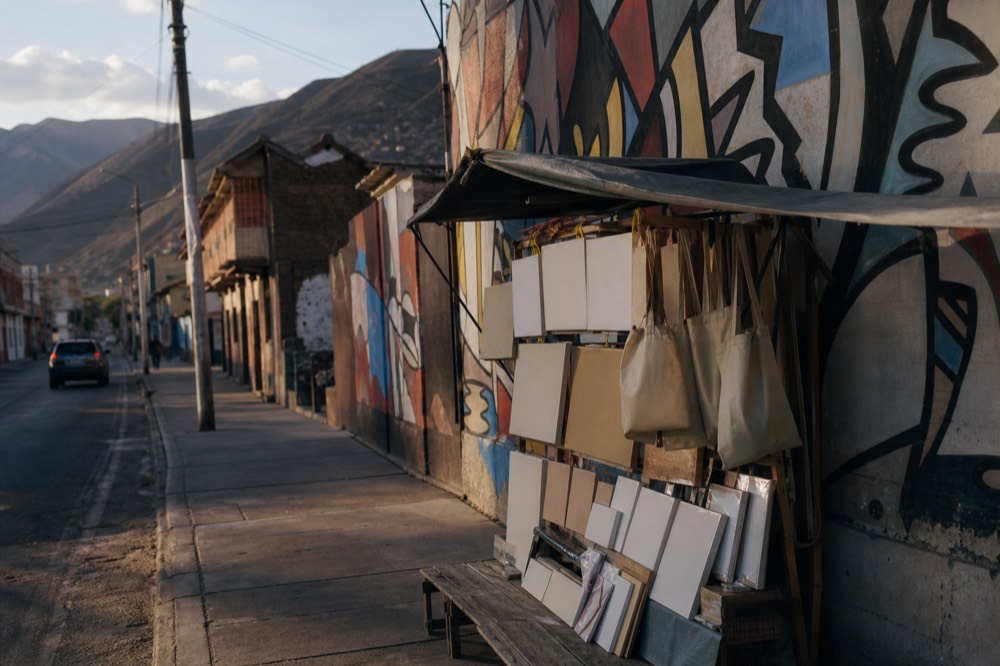
The honest read for a visitor is that going is fine and going carelessly is not. Come on a weekday morning rather than a Sunday afternoon. Buy from stalls on the corridor, tip the performers who work the landings, and photograph the art rather than the residents. What the murals mean up close covers the etiquette in detail, and how safe the corridor is in daylight separates the daytime visitor route from the wider barrio, which is a genuinely different place after dark.
The cheapest way to get the story straight from someone who grew up with it is the three-hour history walk at $14, which pairs the narrative with snacks and street performances. You can see the live dates for the history walk or compare it against the walks that build in five food stops, which take the same corridor at a slower, hungrier pace. If you would rather scan everything at once, the twelve bookable walks, compared sit side by side with ratings and group caps.
Frequently asked questions
Is Comuna 13 the most visited place in Medellin?
Yes. The tourist corridor took more than a million visitors in 2024, making it the city's most-visited site by a clear margin. Earlier counts put it near 25,000 people a week, with weekend days approaching 6,000. Sundays are the busiest day and late morning onward the peak window, so a weekday morning is a very different experience from a Sunday afternoon.
What is Comuna 13 famous for besides the murals?
The escalators, the hip-hop scene and the history. Six sections of free outdoor escalator, about 384 metres in total, opened across 2011 and 2012 and are the visual shorthand for the neighborhood's change. Live rap and breaking happen on the landings, taught through community houses that offer free classes. And the neighborhood is known nationally as the site of Operation Orion in October 2002, the largest urban military operation in Colombia's recent history.
Is Comuna 13 worth visiting now that it is so busy?
For most visitors, yes, with timing. The corridor is free to walk, the escalators cost nothing, there is no entry fee, and guided walks start at $14 with strong ratings across nearly 28,000 reviews. The crowding is real, and it is concentrated on Sundays and from late morning onward. Going early on a weekday, and choosing a smaller group, gets you the same walls with room to hear the guide.
Your next step
Make room for the experience
An editorial starting point — adjust it to your plans below.
Comuna 13 food & mural walk
Have a travel date in mind? Three hours of murals, escalators and local snacks: empanadas, patacón and mango ice cream. Check the departure before arranging the rest of your day.
Meet at Garden Coffee in Comuna 13; transport is extra. Shared group, maximum 40.
Choose a date to see scheduled departures. Final availability and price are confirmed on Viator.
Times are local to Medellín. Schedules do not reserve a place.No verified option fits these choices. Adjust the filters or reset to the general recommendations.
Compare options, fit and whole-party costs
Comuna 13 True Story & street food — Hear the neighborhood story with a local guide, mural stops, empanadas and a mango popsicle. Meet at Garden Coffee; confirm the address shown for your selected booking option.
Metro, cable car & Comuna 13 — Connect the city views and mural route with metro, cable-car and bus tickets included. Allow 4½ hours; meet outside the north entrance of Poblado station.
Comuna 13 art & graffiti workshop — Walk with local guides, taste neighborhood snacks and learn spray-paint technique on dedicated practice walls. Three hours, maximum 10, Insiders Foundation meeting point. Not suitable for wheelchair users or hearing-impaired travelers.
Affiliate links support this guide. Product details checked 15 September 2026; confirm your selected option with the provider.