How to Get to Comuna 13: Metro, Cable Car, Taxi and Pickup
One fare of about 4,400 pesos moves you from a glass office tower in the south of the valley to the bottom of a hillside barrio in the west. The hard part is not the money.
 By Andrés Restrepo, Comuna 13 tour guide & cultural specialist
Short answer
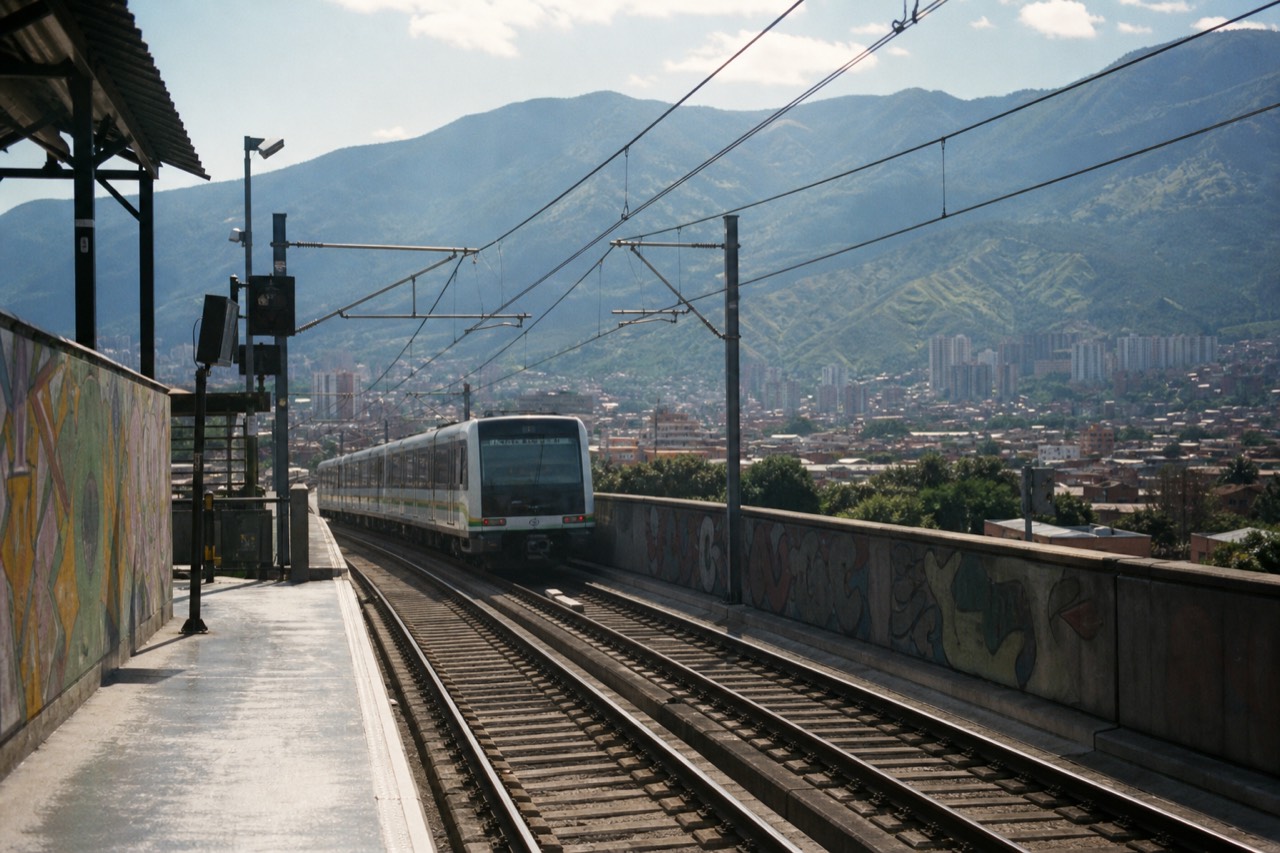
Take metro Line A to San Antonio, change to Line B, and ride west to San Javier, the last station on the line. From El Poblado that is roughly 14 minutes of track time and 30 to 40 minutes door to door. One integrated fare of about COP 4,400 also covers the Line J cable car up the hillside.
The station is called San Javier and it is the end of the line, which turns out to be the most useful thing about it. Trains stop there because the track stops there. You get off with everyone else, walk out into a plaza full of fruit carts and idling minibuses, look up at a wall of brick houses stacked six deep on a slope, and understand immediately why the city eventually put escalators on it.
Getting to Comuna 13 is not complicated. It is just unfamiliar, and almost every guide skips the part that actually confuses people: the trip does not end at the station. San Javier sits at the bottom. The murals, the escalators and the terraces are several hundred vertical metres above you, and that last stretch is where visitors stand around looking at their phones.
This page covers all of it. The metro from three different neighbourhoods, the airport transfer that is longer than people expect, the cable car and its maintenance calendar, when a taxi is genuinely better, and the case for skipping the whole exercise and booking something with a car at your hotel door.
Prices and review counts are August 2026 examples, not live quotes. Itinerary details were rechecked on 15 September. Confirm the final price for your date and party with the provider.
How do you get to Comuna 13 from El Poblado?
Ride Line A north from El Poblado to San Antonio, cross the platform to Line B, and ride west to San Javier, the terminus. Track time is about 14 minutes plus the change. Door to door, allow 30 to 40 minutes from most El Poblado hotels, since walking to the station and climbing to the platform eats the rest.
Line A is the spine of the valley, running north to south along the river. Line B branches west from San Antonio and ends at San Javier. That is the whole geometry, and once you have it in your head the city stops feeling confusing.
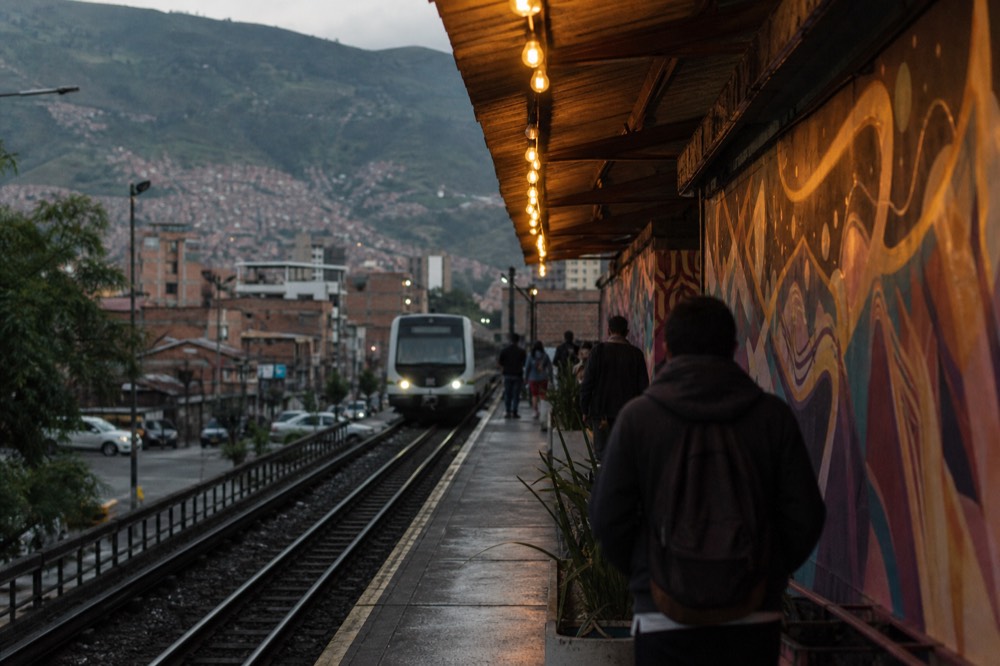
The one thing to get right is direction. At El Poblado you want the northbound platform, the one signed toward Niquía, not the southbound one toward La Estrella. At San Antonio you are looking for Line B westbound. San Antonio is a two-level interchange and it is busy, so give yourself a minute to read the platform before you commit to a staircase.
| Leg | Line | From | To | Roughly |
|---|---|---|---|---|
| Walk to the station | On foot | Hotel in El Poblado | El Poblado station | 5 to 15 min |
| First train | A, northbound toward Niquía | El Poblado | San Antonio | 7 to 8 min |
| Change platforms | Interchange | San Antonio | San Antonio | 3 to 5 min |
| Second train | B, westbound | San Antonio | San Javier | 6 to 7 min |
| Station to the barrio | Minibus, taxi or on foot | San Javier | Escalator entrance | 8 to 30 min |
Add those up honestly and you land between 30 and 40 minutes from an El Poblado hotel to the bottom of the hill, and closer to an hour before you are standing among the murals. That is not a reason to leave later. It is a reason to leave earlier, because the corridor gets progressively more crowded through the day and the hours that stay quiet are the first ones after the trains start.
What does the metro cost, and which ticket covers the cable car?
A single bearer ticket is about COP 4,400 per ride. A Cívica card brings that down to roughly COP 3,820. One integrated fare covers the metro plus most of the cable-car lines, including Line J from San Javier, so riding up the hillside adds nothing to the price. Line L to Arví is the exception and needs its own ticket.
That integrated-fare rule is the single best-value fact about visiting this neighbourhood, and it surprises almost everyone. You tap in once at El Poblado, you ride two train lines and a cable car, and you have paid a shade over a dollar. Nothing about the cable car is a tourist attraction with tourist pricing. It is a commuter line that happens to have a spectacular view.
| Ticket | Cost per ride | What it covers | Worth it if |
|---|---|---|---|
| Occasional bearer ticket or QR | about COP 4,400 | One integrated journey: metro plus connecting cable cars | You are here for a few days |
| Cívica card, per ride | about COP 3,820 | Same coverage, lower per-ride rate | You will ride more than a handful of times |
| Line L to Arví | Separate charge | The forest line beyond Santo Domingo only | You are going to the Arví park |
| Comuna 13 itself | Nothing | The escalators, the streets, the viewpoints | Always. There is no entry fee |
The last row matters more than it looks. There is no ticket, no entry gate and no tourist tax for Comuna 13. It is a residential neighbourhood with public infrastructure running through it, and anybody suggesting otherwise on the street is not selling you anything official. Fares and line schedules are published by the operator of the Medellín metro and do shift with the annual tariff review, so treat the peso figures above as current-and-approximate rather than carved in stone.
A Cívica card is only worth the errand if you are riding a lot. For a two-day visit, the bearer ticket is fine and saves you the queue.
Where does Comuna 13 start?
Comuna 13 is the city's thirteenth district, San Javier, on the western slope of the Aburrá valley. For visitors it effectively starts at San Javier metro station, at the bottom. The mural corridor and the escalators sit in the Las Independencias sector, several hundred metres uphill from the station, not at street level beside it.
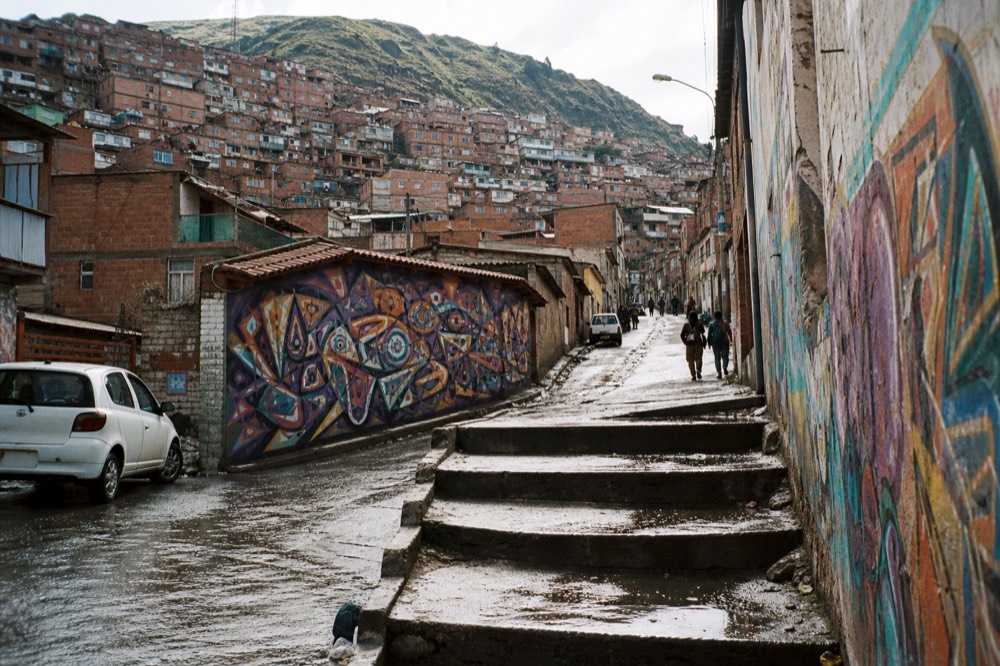
Medellín is divided into 16 comunas, and the number 13 is simply an administrative label that history turned into a name. The district is far bigger than the part tourists see. It holds a large working population across many barrios, most of which never appear in a photograph, and the visitor corridor is one strip of one sector of it. Understanding that keeps expectations straight: you are walking through a neighbourhood where people live, not into a site with a boundary and a gate.
The practical answer to where it starts is the plaza outside San Javier station. From there, three things happen. Minibuses collect passengers for the climb. Guides gather groups under whatever shade exists. And a line of people walk uphill on foot because nobody told them how far it is.
The story of how a district became shorthand for the whole city is a longer one, and what happened here in 2002 and after explains the escalators, the murals and the tour economy in a way no transport table can.
How do you get there from Laureles or Estadio?
Laureles and Estadio sit on Line B already, which makes them the easiest base in the city for this trip. From Estadio station it is a straight westbound run to San Javier with no change at all, usually under ten minutes of track time. Floresta and Santa Lucía are the two stops in between.
If you are staying in Laureles, walk to whichever Line B station is closest and ride west. That is the entire instruction. No interchange, no reading a map at San Antonio, no crossing the river. It is one of the quiet reasons experienced repeat visitors to Medellín tend to book Laureles over El Poblado.
| Starting point | Route | Changes | Track time | Notes |
|---|---|---|---|---|
| El Poblado | Line A north to San Antonio, then Line B west | 1 | about 14 min | Busiest interchange in the system |
| Laureles or Estadio | Line B west | 0 | under 10 min | Simplest trip in the city |
| Centro, near San Antonio | Line B west | 0 | about 7 min | Board at the interchange itself |
| Envigado or Sabaneta | Line A north to San Antonio, then Line B west | 1 | 20 to 25 min | Add walking time at both ends |
| Airport at Rionegro | Road transfer into the valley first | Road plus metro | Allow half a day | See the section below |
Estadio to San Javier is short enough that people staying in Laureles sometimes do the barrio as a morning and are back for lunch. From El Poblado the same plan works, but it costs you the interchange and about twenty extra minutes each way.
How do you get to Comuna 13 from the airport?
José María Córdova sits outside the city, over the eastern ridge at Rionegro, and the drive down into the valley takes roughly an hour in normal traffic. There is no metro connection. Take a taxi, a booked transfer or the shared airport van, drop your bags at your hotel, and treat Comuna 13 as a separate trip on a separate day.
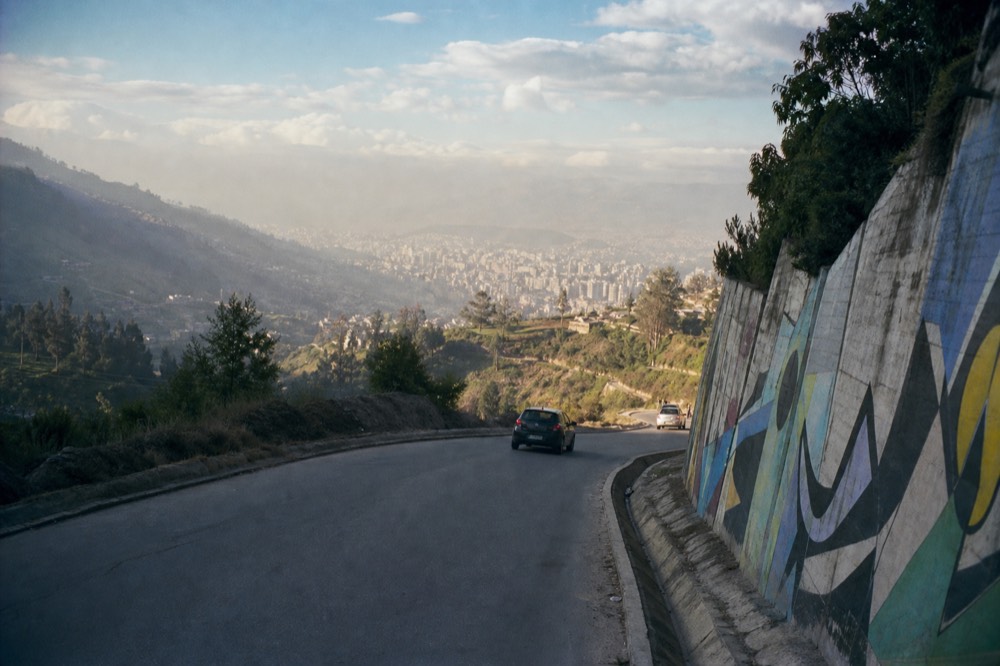
The mistake here is geographic. People look at a map, see that Medellín has an international airport, and assume the same relationship a European city has with its airport. It is not that. The airport is up on a plateau east of the valley rim, and everything that follows is a mountain road with switchbacks, cloud and its own traffic pattern. An arrival that lands at four in the afternoon is not doing a barrio tour that day.
There is a smaller airport, Enrique Olaya Herrera, sitting inside the city itself for some domestic flights. If your itinerary routes you through that one, you are already in the valley and the metro is a short ride away rather than a mountain descent.
The clean plan from an international arrival looks like this: land, transfer down, check in, sleep, then do the barrio the next morning when the light is good and the corridor is still half empty. If you would rather have the whole thing handled with a driver who collects you, the private-transport options are compared further down this page and on the private and hotel-pickup tours hub.
Is the Line J cable car worth riding, and when is it closed?
Line J runs from San Javier up the western slope to La Aurora, and your metro fare already covers it. It is the best fifteen minutes of transport in the city for the price. It closed for annual maintenance from 16 to 22 July 2026, part of a rotation that works through the six cable lines between July and October each year.
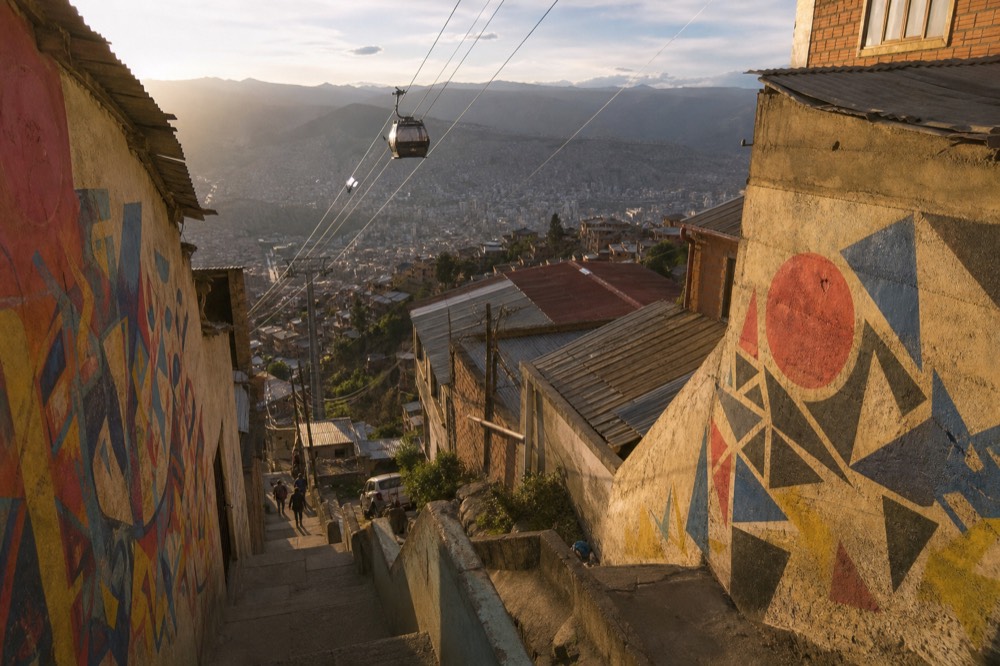
What the ride gives you is scale. From street level you cannot see the shape of what you are visiting, because you are inside it. From a cabin fifty metres up, the whole western slope opens: the density of the housing, the way the ravines cut the hillside into separate barrios, the distance between the valley floor and the ridge. Guides who build the cable car into their route do it for exactly that reason, and it is why the transit-heavy formats read differently from a pure walking tour.
| Detail | Line J |
|---|---|
| Route | San Javier to La Aurora, up the western slope |
| Fare | Included in one integrated metro fare, no extra charge |
| Typical hours | Around 9:00 to 22:00, later start than the trains |
| Trains for comparison | Lines A and B typically 4:30 to 23:00 Monday to Saturday |
| Sundays and holidays | Most lines around 5:00 to 22:00, cables to a similar late-morning start |
| Known 2026 closure | Annual maintenance 16 to 22 July |
| Maintenance season | Rotating programme across six cable lines, July to October |
| Other suspensions | Occasional and weather-driven, usually short |
That hours row is the part people get wrong. Trains start before dawn. The cable cars generally do not open until mid-morning, so an early-start plan built around beating the crowds means arriving by train and going up on wheels or on foot, with the cable car saved for the way back down. Line schedules and any live suspension notices go up on the metro operator's own site, and per-line variation is real, so confirm the day before if the cable ride is the whole point of your visit.
Should you take a taxi or a rideshare instead?
Sometimes, and mostly at the edges of the day. A car makes sense before the cable cars open, after the trains stop, in heavy rain, or with luggage, small children or anyone who cannot manage stairs. Book through an app rather than hailing on the street, and expect surface traffic to erase most of the time saving at peak hours.
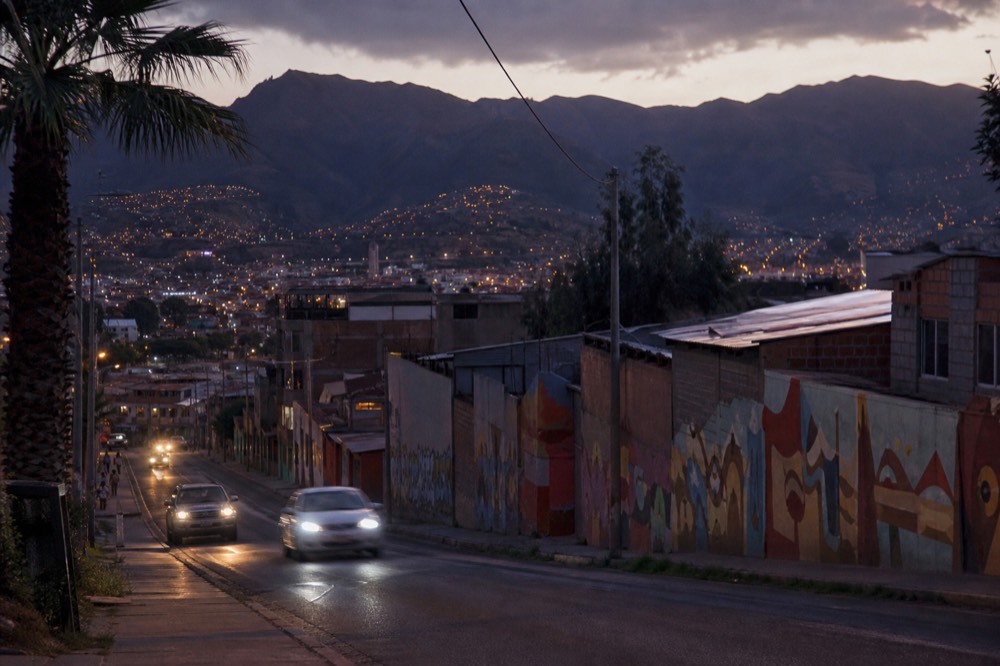
The metro is fast because it is grade-separated. A car is on the same roads as every delivery van and motorbike in the valley, and the run from the south of the city to the western slope crosses the whole grid. Outside peak hours a car is comfortable and roughly comparable. Inside them it is worse, and the fare climbs while you sit still.
| Way in | What it costs | Timing versus the metro | Where it goes wrong |
|---|---|---|---|
| Metro, Lines A and B | About COP 4,400 a ride | The benchmark | Crowded at commuter peaks, stairs at both ends |
| Metro plus Line J cable | Same single fare | Adds a scenic leg, not much time | Cable opens late morning |
| App-booked car | Metered by app, varies with demand | Similar off-peak, slower at rush hour | Traffic, surge pricing, finding the pickup point |
| Street-hailed taxi | Metered, varies | Same as above | No trip record, no quote up front |
| Minibus from San Javier | A few thousand pesos | Only covers the climb | Cash, local knowledge, no fixed stop for visitors |
| Tour with hotel pickup | Inside the tour price | Slowest on paper, simplest in practice | You buy the whole day, not just the ride |
One safety note that belongs here rather than buried in a footnote. Canada's government travel advice for Colombia specifically flags drugging with scopolamine in cities including Medellín, which is why an app-booked car with a recorded trip and a named driver is the better default over a car you flag down outside a bar at midnight. You can read Canada's country advice for Colombia in full. In daylight, on a normal weekday, the metro is the safest and least eventful option on this whole table, and it is what most residents of the barrio use themselves.
What happens when you walk out of San Javier station?
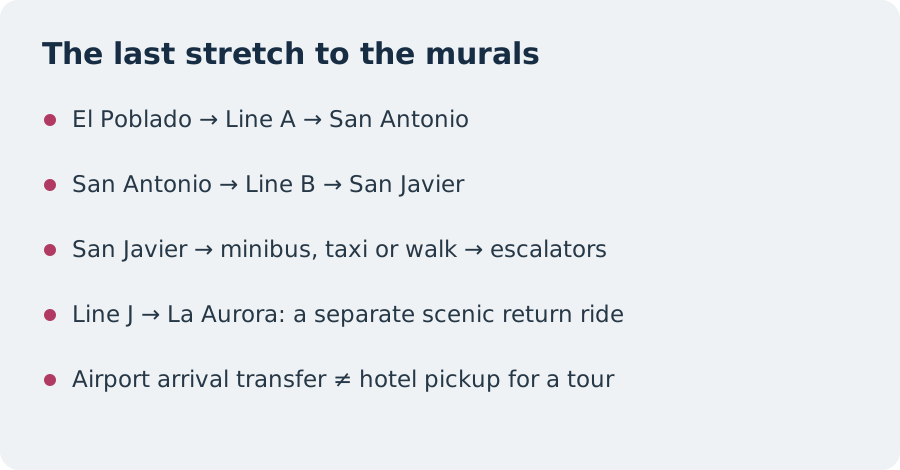
You come out into a plaza with fruit carts, minibuses and a lot of noise, at the bottom of a slope. The escalators are uphill from here, not beside you. Use a local minibus, taxi or uphill walk to the escalator entrance. Line J is a separate scenic ride toward La Aurora; it does not drop you at the mural corridor.
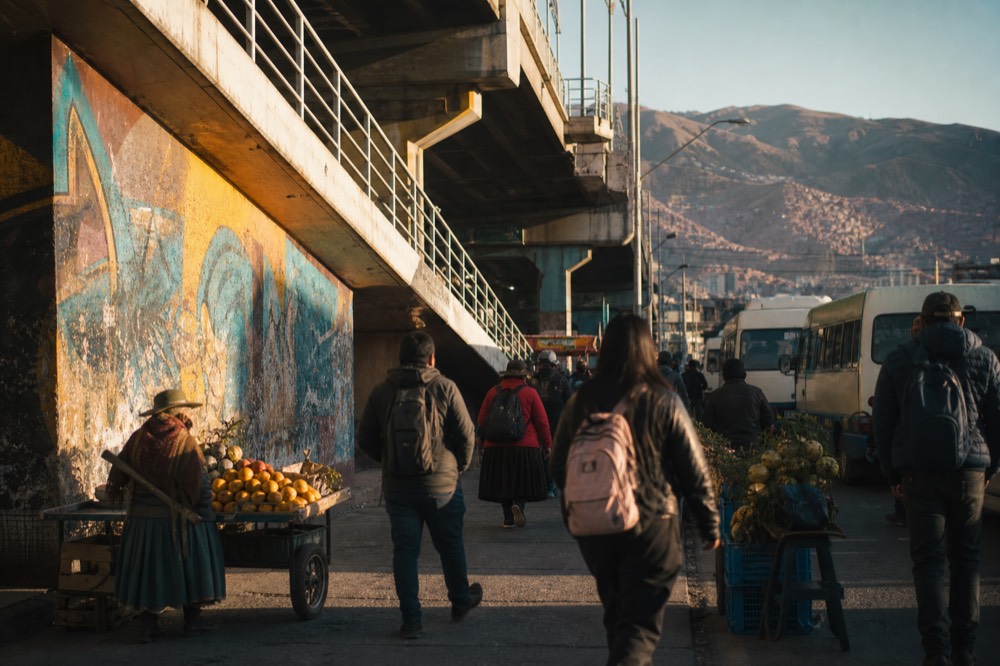
This is the moment that separates a smooth visit from a scrappy one. Nothing at the station tells a foreign visitor which of the white minibuses climbs toward Las Independencias, and asking works better than guessing. Local routes such as the 221i and 225i run up that way. Fares are small and paid in cash, in pesos, and drivers will not be waiting on a card.
| From San Javier station | Time | Cost | Effort | Best for |
|---|---|---|---|---|
| Local minibus toward the barrio | 8 to 12 min | A few thousand pesos, cash | Low | Most visitors, most days |
| Line J cable car (separate outing) | Allow time for a return ride | Confirm integrated fare | Low while seated | Valley views; not access to the escalator entrance |
| Walking uphill | 20 to 30 min | Nothing | High, constant gradient | Fit walkers on a cool morning |
| Taxi or app car from the plaza | 5 to 10 min | Short metered ride | None | Rain, luggage, mobility limits |
| Meeting a guided group here | Zero, they take you | Inside the tour price | None | First-time visitors |
Walking is genuinely pleasant on a cool morning and genuinely punishing at one in the afternoon in April. The gradient does not let up, the pavement is uneven in places, and you arrive at the escalators already tired, which is a strange way to begin a visit built around riding escalators. If you want the full independent version, doing Comuna 13 on your own sets out what you gain and what you miss without a guide.
Once you are up there, the escalators do the rest of the climbing for you. How the six escalator sections work covers the hours, the maintenance rotation and which stretches are stairs.
Is a tour with hotel pickup worth the extra money?
It buys back the entire logistics problem: no transfers, no minibus guesswork, no working out which plaza to stand in. Private formats with a car and hotel pickup start around $79 and run to about $119, against roughly $14 to $28 for a walk you reach yourself. You are paying for the door-to-door, plus a guide for the parts a metro map cannot explain.
There are two honest ways to look at this. If you are comfortable on public transport, speak some Spanish and enjoy working a city out, the metro route above is cheap, safe in daylight and part of the experience. Riding a commuter cable car over the rooftops of the neighbourhood you are about to walk through is a better introduction than any transfer van.
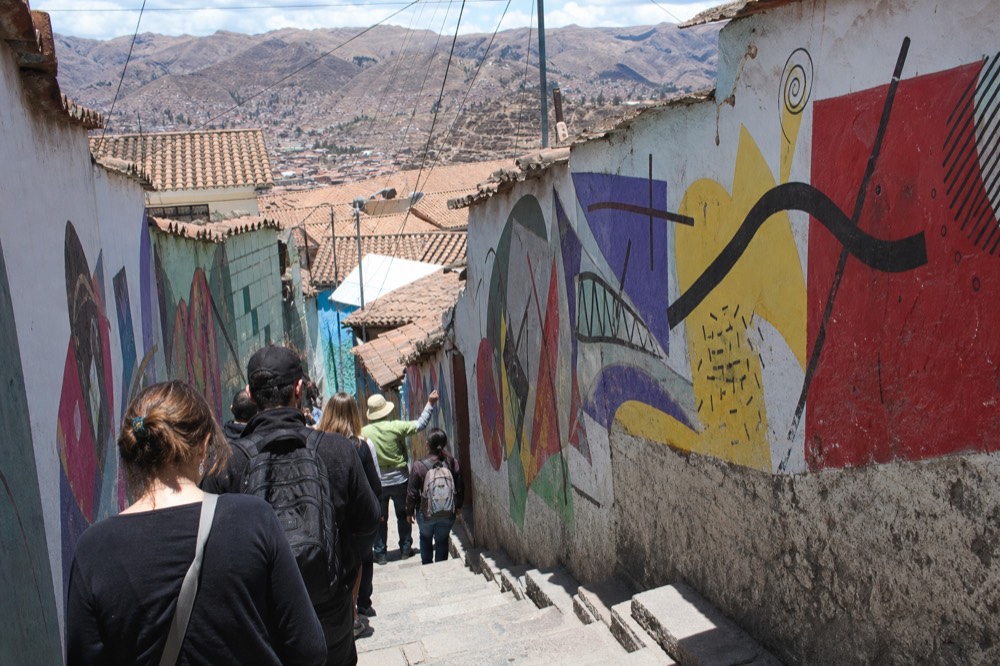
If you have one free morning, a group with mixed mobility, or you simply do not want to spend the first hour of your day solving a transport puzzle, pickup is worth what it costs.
| Format | From | Duration | Pickup | Rating |
|---|---|---|---|---|
| Private tour with the cable car included, access to confirm with the operator | $79 | 3 h | Yes | 5.0 across 23 reviews |
| Private car, barrio plus city history | $113 | 4 to 5 h | Yes | 4.9 across 258 reviews |
| Private pack, barrio plus city history with transport | $119 | 5 h | Yes | 4.8 across 47 reviews |
| Full-day city and barrio combination with lunch | Historical $51.70 | 7 to 8 h | No; meeting point | 4.9 across 1,915 reviews |
| Transit-heavy district tour with the cable car ride | $22 | 3 to 4 h | Meet at a station | 4.7 across 1,541 reviews |
| Street-food walk you reach yourself | $21 | 3 h | Meet in the barrio | 4.9 across 9,044 reviews |
The accessibility line deserves attention. Comuna 13 is a hillside of stairs and uneven streets. The private product has an accessibility flag, but the full route is not established here as step-free. Confirm exact arrangements with the operator before booking. You can check the private cable-car tour’s route and dates when comparing it.
For a full day where the barrio is one act of three and lunch is already handled, the combination formats sit on the full-day city and barrio combinations hub. If you would rather stay narrow and cheap, the shorter walks are all on the full 12-tour comparison.
What should you sort out before you leave the hotel?
Carry small peso notes for the minibus, leave earlier than feels necessary, and check whether Line J is running if the cable car is the reason you are going. Bring shoes with grip, because the barrio is a hillside. Skip the big camera bag and the jewellery in a crowd of a thousand people.
Cash first. The metro takes a ticket you buy at the station, but minibuses, drink stalls, the fruit carts on the terraces and the tip for a free walking guide are all cash and all in pesos. Small notes, in a front pocket, not a wallet fanned open on a landing.
Timing second. The corridor fills through the day and Sunday is the busiest day of the week, so a nine o'clock start and a two o'clock start are two different neighbourhoods. Weather runs the same way: mornings in Medellín are reliably better than afternoons, and which months are driest here explains why that pattern holds all year rather than just in the wet season.
Third, keep the risk framing proportionate. The daytime corridor is heavily walked and heavily policed, and the honest concern is a phone out of a back pocket in a crowd, not anything dramatic. The real safety picture for the barrio goes through what the advisories say and what actually happens on organised daytime visits.
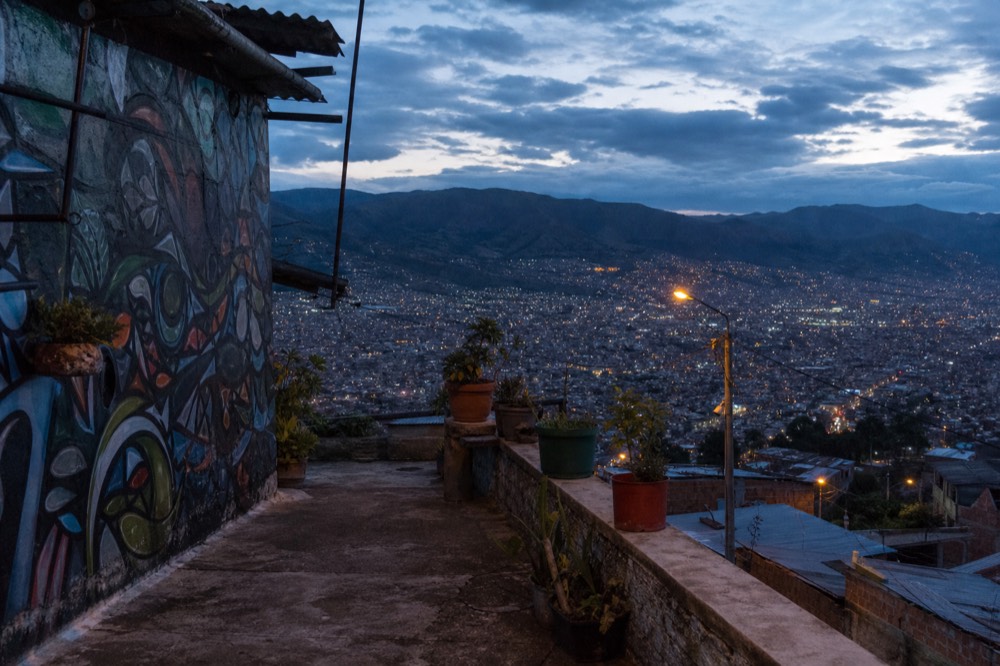
One last piece of sequencing that repeat visitors work out and first-timers rarely do. Go up by minibus or on foot in the morning when the cables are closed and the light is on the eastern face of the hill, spend the middle of the day on the escalators and the terraces, then ride the cable car back down in the afternoon once it is open. You get the view when you have context for it, and you skip the queue that builds at the cable station later in the day. The transit-heavy guided formats build the route in roughly that order for the same reason, and you can see how the district route sequences the metro, the cable car and the walk before deciding whether to do it yourself.
Frequently asked questions
Which metro station is Comuna 13?
San Javier, the last stop on Line B. The station sits at the bottom of the slope, and the mural corridor and escalators are uphill from there, reached by local minibus, the Line J cable car, or a walk of about 20 to 30 minutes.
How much does it cost to get to Comuna 13 by metro?
About COP 4,400 for a single bearer ticket, or roughly COP 3,820 per ride with a Cívica card. That one integrated fare also covers the Line J cable car up the hillside, and there is no entry fee or tourist tax for the neighbourhood itself.
How long does it take to get to Comuna 13 from El Poblado?
Around 14 minutes of track time, with one change at San Antonio from Line A to Line B. Door to door from an El Poblado hotel, allow 30 to 40 minutes, and closer to an hour before you are standing among the murals.
Is the Line J cable car included in the metro ticket?
Yes. One integrated fare covers the metro and most connecting cable lines, Line J included, with no extra charge. Line L to Arví is the exception and requires a separate ticket. Line J closed for annual maintenance from 16 to 22 July 2026.
Do you need a guide to find Comuna 13 on your own?
No. The metro route is straightforward and the corridor is easy to find once you are uphill. A guide buys you the history behind the walls and, on the pickup formats, removes the transfers entirely. Going alone is cheaper and works fine in daylight.
Your next step
Make room for the experience
An editorial starting point — adjust it to your plans below.
Metro, cable car & Comuna 13
Have a travel date in mind? Connect the city views and mural route with metro, cable-car and bus tickets included. Check the departure before arranging the rest of your day.
Allow 4½ hours; meet outside the north entrance of Poblado station.
Choose a date to see scheduled departures. Final availability and price are confirmed on Viator.
Times are local to Medellín. Schedules do not reserve a place.No verified option fits these choices. Adjust the filters or reset to the general recommendations.
Compare options, fit and whole-party costs
Comuna 13, cable car & street food — A four-hour route with metro, cable car, bus, cheese arepa and coffee tasting. Meet at Poblado station. Maximum 10; not suitable for mobility impairments or travelers over 70.
Comuna 13 with local guides & snacks — Explore murals, escalators and local stories with a guide who grew up in Comuna 13, plus snacks and coffee or chocolate. Meet at Mestizaje Coffee Gallery. Not suitable for wheelchair users or hearing-impaired travelers.
Private Comuna 13 & metrocable — Your own guide, central Medellín hotel pickup and a three-hour Comuna 13/metrocable route. Priced per person, with food and tips extra. Confirm the precise pickup address and any mobility needs before booking.
Affiliate links support this guide. Product details checked 15 September 2026; confirm your selected option with the provider.